


Skipper OnDeck will have a dynamic presence at the Bosphorus Cup 2026, reporting once again directly from the heart of the action.
There are yacht races where the destination is little more than the backdrop. Then there is the Bosphorus Cup. This September, as the event celebrates 25 years, sailors will arrive in Istanbul for three days of competition centred on a city shaped by the sea. Racing takes place on the open waters of the Marmara Sea and through the Bosphorus Strait itself, which divides Europe from Asia.
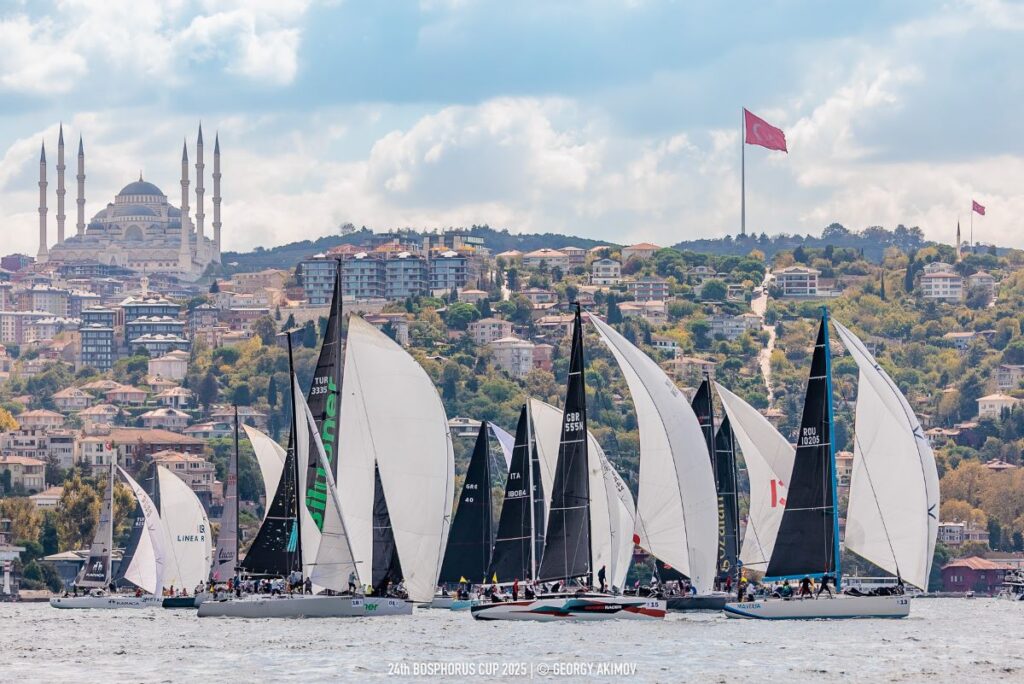
The race on the Bosphorus is a rare experience. For one day a year the waterway is closed to commercial traffic and reserved for competitors in the Bosphorus Cup. The renowned strait separates Europe from Asia and connects the Black Sea with the Sea of Marmara andthe Mediterranean beyond. For centuries this narrow passage has been a meeting point for cultures, tradeand empires. On Saturday 19 September, it becomes a race course. Starting from the southern end, the Bosphorus Cup fleet will race up and down the strait, through the centre of Istanbul, passing beneath the city’s great suspension bridges and besides the palaces, fortresses, mosques, waterfront mansions and neighbourhoods that fill both shores. Skipper OnDeck will have a dynamic presence at the Bosphorus Cup 2026, reporting once again directly from the heart of the action.
For visitors, crossing from Europe to Asia is considerably more relaxed. One of the simplest ways to understand Istanbul is also one of the best value sightseeing experiences in the city: take a local ferry across the Bosphorus. From the water, the geography of Istanbul suddenly makes sense.
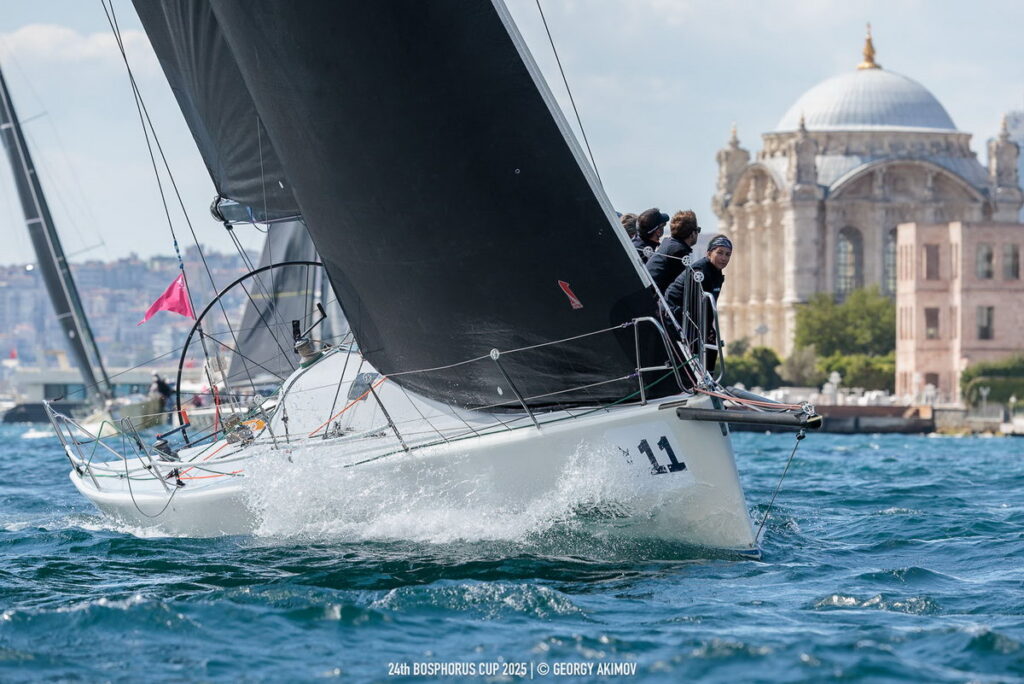
Most racing sailors are accustomed to reading the wind and the water. In the Bosphorus, they also have to learn to read the city. Strong currents flow through the strait, while its bends, headlands, hills and built-up shoreline influence both wind and water. The obvious route is not always the quickest. The Bosphorus Strait features a two-way counter-current system where surface and deep waters flow in opposite directions simultaneously. The surface current is southbound from the Black Sea to the Sea of Marmara. It is powered by a 30–40 cm difference in water level, as the Black Sea receives more freshwater from rivers and rain than it loses to evaporation. The current averages about two to three knots (0.9 to 1.5 metres per second and up to 2 m/s in narrow spots), resembling a fast river.
The surface current extends down roughly 15m, so the northbound current is rarely a direct impact on the fleet. There are, however, eddies and back currents. In particular, the Devil’s Current (Şeytan Akıntısı) lcated near Kandilli and Arnavutköy/Bebek. Sharp turns and narrow depths accelerate the water into a treacherous whirlpool. Local knowledge is critical. During the 2024 Bosphorus Race, Turkish Olympian Alican Kaynar described how his team aboard Orient Express VIsometimes sailed less than three metres from shore as they searched for relief from a current that he estimated was running at five or even six knots (9 to 11 m/s) in places. His teammate Arif Gurdenli described a constant series of tacks and gybes, with crews reacting rapidly to changing conditions while simultaneously keeping an eye on their competitors. In this race, a few metres can make all the difference. One shore can pay while the other does not. A patch of apparently favourable water can quickly become adverse current. And then the wind changes. Istanbul’s local winds have become such a part of the identity of the race that the Bosphorus Cup is sometime referred to as the “Theater of Winds.”
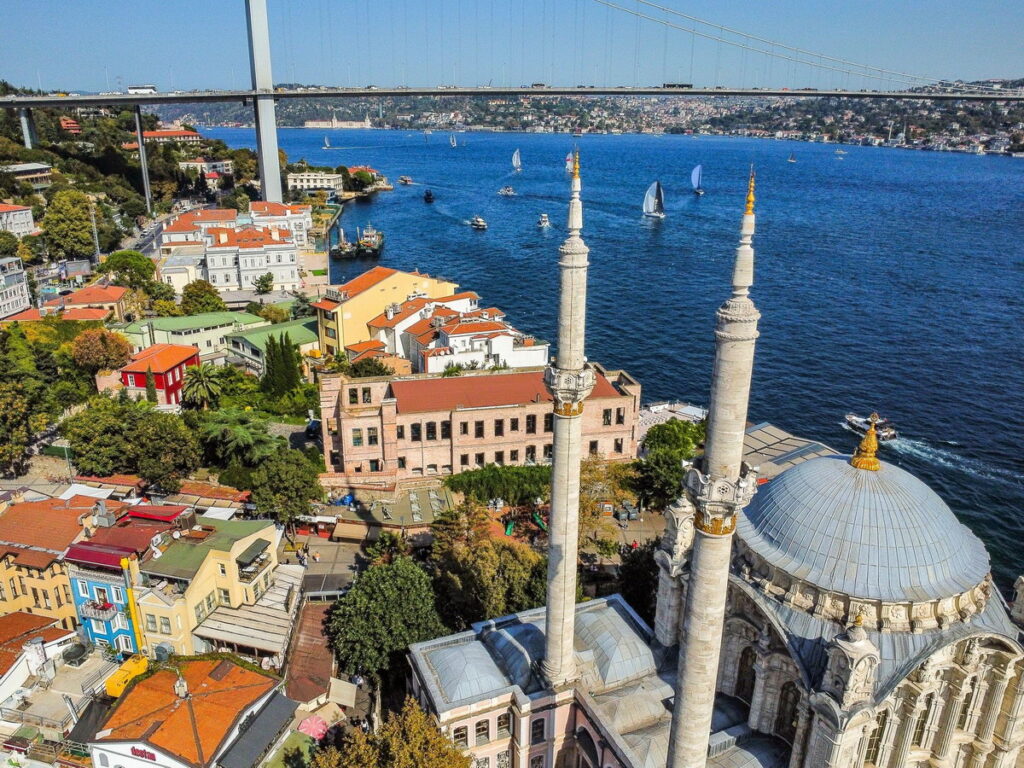
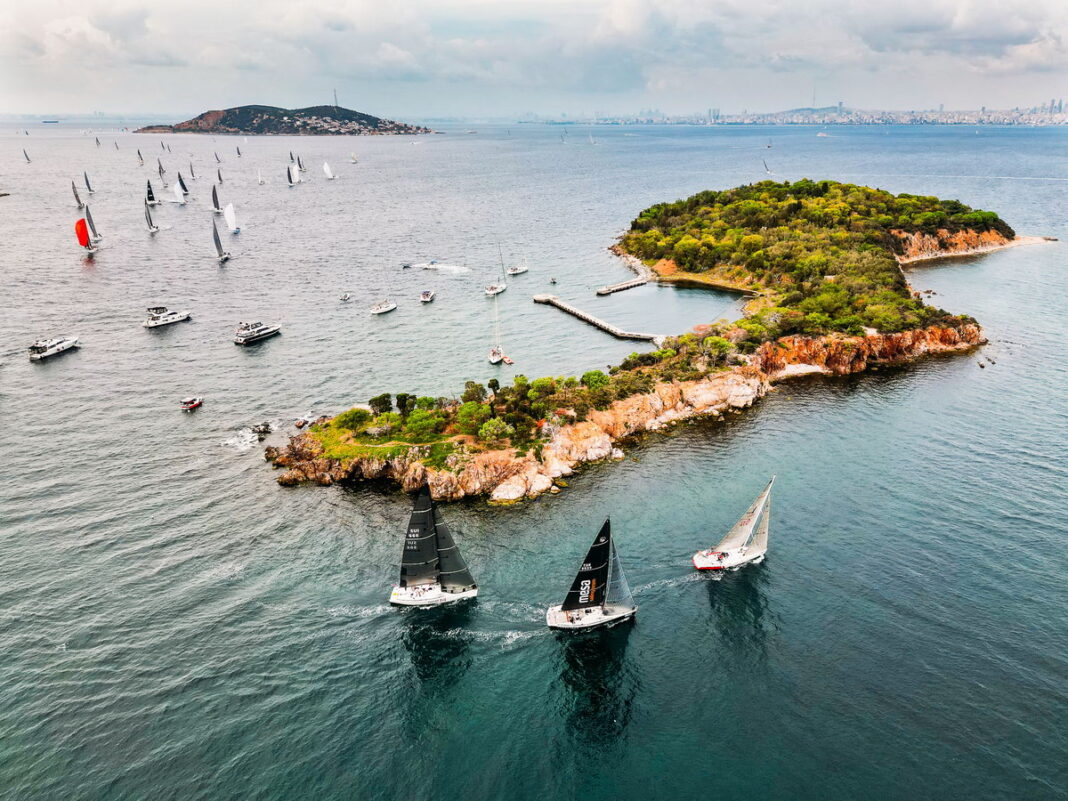
The Bosphorus may get most of the attention, but Istanbul’s relationship with the water extends far beyond the strait. For sailors with a free afternoon, the Princes Islands offer a very different perspective on the city. A ferry across the Sea of Marmara takes visitors away from the energy and density of central Istanbul to Büyükada, the largest of the archipelago’s nine islands. Historic mansions, tree-lined streets and waterfront restaurants create a striking contrast to the city, while the ferry journey itself offers another opportunity to experience Istanbul from the water. Alternatively, stay closer to the racing and simply take one of Istanbul’s everyday ferries across the Bosphorus. A journey between the European and Asian sides is not just a way of getting around; it is one of the simplest and most enjoyable ways to understand the geography of a city defined by the sea. For sailors accustomed to seeing destinations from the water, Istanbul may be one of the rare cities where the best sightseeing begins before you even step ashore.
Perhaps the biggest difference between the Bosphorus Cup and most other major yacht races is what happens off the racecourse. At this race, the city is right there. People enjoying Saturday breakfast or brunch beside the Bosphorus can suddenly have racing yachts passing directly front of them and often only metres away. Ferries, waterfront restaurants, parks, terraces and neighbourhoods become viewing areas as the fleet moves through the strait.This year, spectators will also be able to follow Saturday’s racing action from the Bosphorus Cup Fan Zone located at Akıntıburnu in Arnavutköy.
And if there is time before or after the racing, Istanbul provides more than enough reasons to escape the marina. Walk to Hagia Sophia and the Blue Mosque. Get lost in the Grand Bazaar. Cross the Galata Bridge. Take a ferry to Kadıköy on the Asian side. Eat fish beside the Bosphorus. Start the day having breakfast overlooking the water. Whatever else is on the itinerary, make sure to spend some time simply watching the Bosphorus. Ultimately, this famous piece of water is what connects the experience of visiting Istanbul with the experience of racing here.
The strait is not a backdrop to the city. It is part of it.
25 YEARS OF RACING IN ISTANBUL
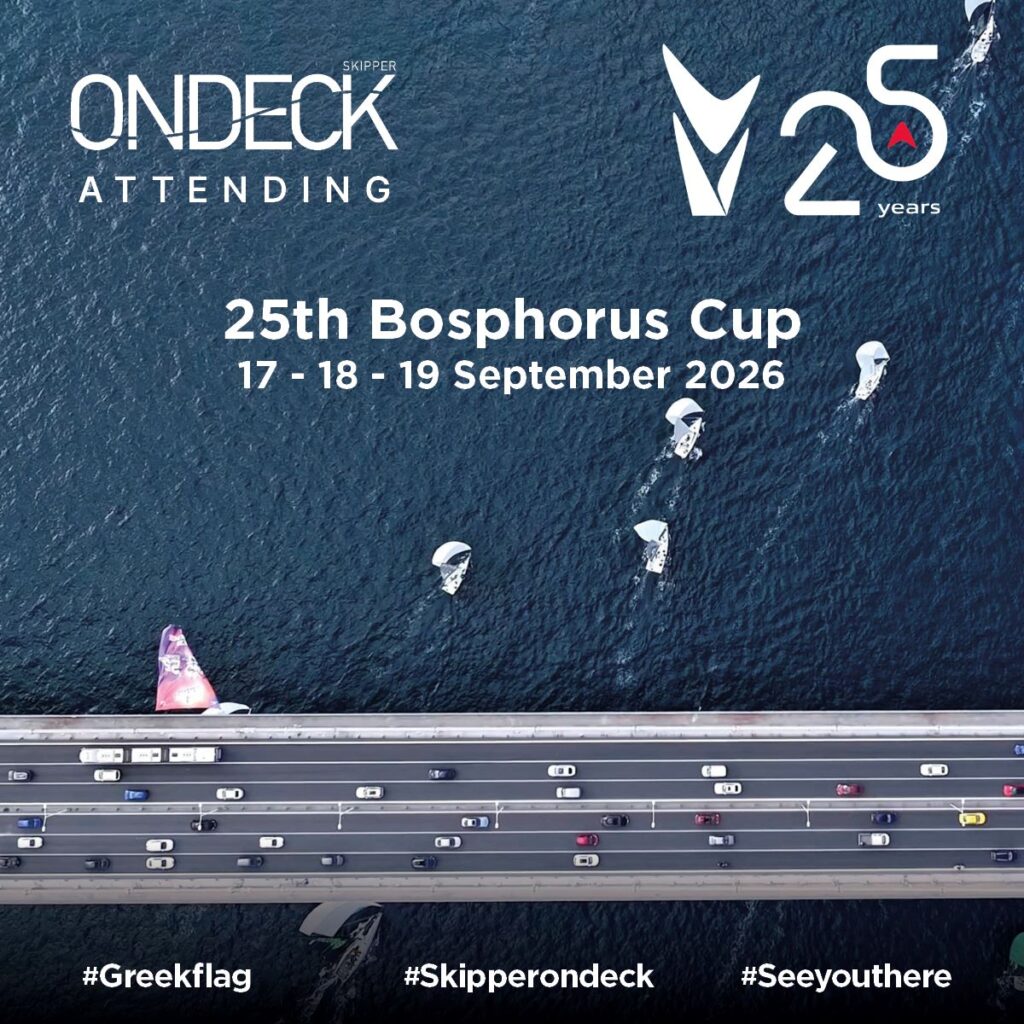
The first Bosphorus Cup took place in 2002, created by founder Orhan Gorbon with the ambition of bringing yacht racing into the heart of Istanbul. Twenty-five years later, that idea remains at the centre of the event. The 2026 Bosphorus Cup takes place from 17 to 19 September, with two days of racing on the Marmara Sea before the fleet takes on the defining Bosphorus Race on Saturday. For the sailors, winning the Bosphorus Cup matters. However, long after the details of the racing and the results have been forgotten, there is one thing they will always remember: They raced through Istanbul, between Europe and Asia. And there is nowhere else quite like it.