


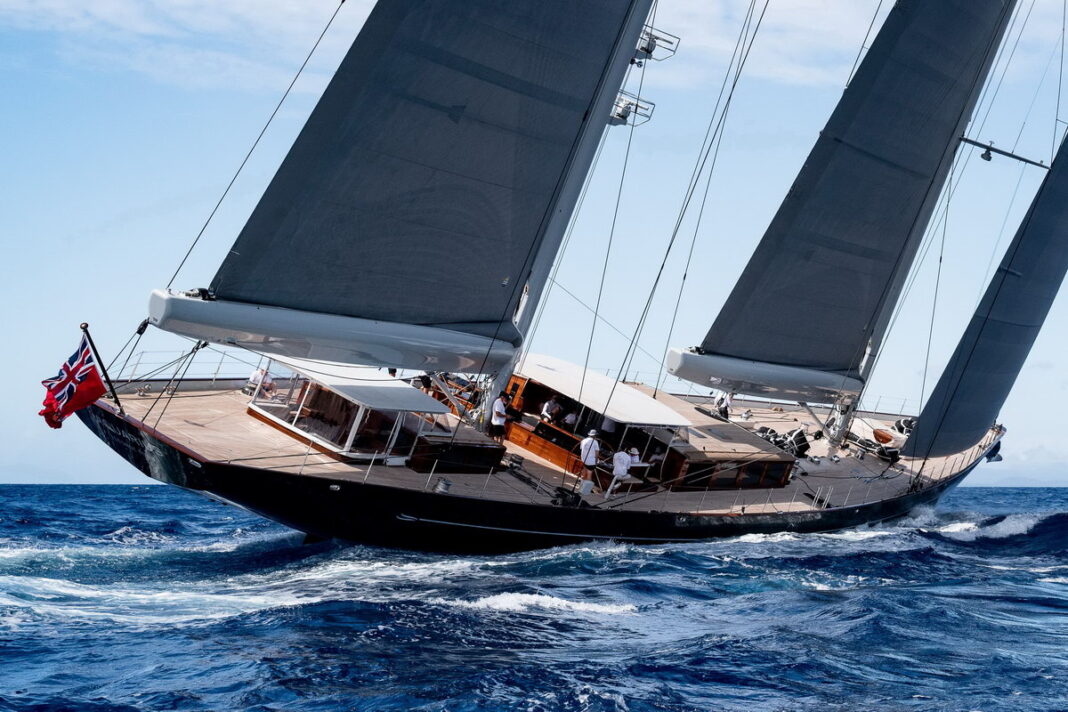
Royal Huisman has delivered the new 65-meter ketch Aquarius, perfectly combining classic elegance with enhanced volume and superior performance.
When superyacht owners publicly describe their custom sailing vessel as being nearly perfect, taking on the ambitious endeavor of building a replacement represents no ordinary challenge. Yet, renowned Dutch shipyard Royal Huisman, together with a world-class design and engineering team, managed to achieve precisely that with the successful delivery of Project 408, a magnificent new 65-meter, 212-foot performance ketch named Aquarius. Delivered in 2025 in Vollenhove, Netherlands, this breathtaking vessel was crafted for returning clients who previously owned a 56-meter ketch of the exact same name built by the same shipyard in 2018. The design brief for the new vessel was simple and straightforward in concept, yet exceptionally demanding in its technical execution. The owners sought to retain the timeless, classic visual elegance of their former yacht -characterized by a graceful spoon bow, an overhanging stern, a striking black hull, and varnished teak deckhouses- while simultaneously expanding guest accommodations, increasing total living volume, and significantly boosting overall sailing performance.
To execute this vision seamlessly, the original design team was reassembled, bringing together the naval architects at Dykstra Naval Architects and interior designer Mark Whiteley, alongside experienced project manager Godfrey Cray and Captain James Turner. Although the new Aquarius visually resembles her predecessor from a distance, the vessel represents a massive evolution in marine engineering. The total volume of the yacht has been expanded by an impressive 45 percent. This dramatic increase in spatial volume allowed the designers to incorporate an additional ensuite guest cabin, enlarge the owner’s suite, create an expanded gym, add a larger cinema and media room, and design a 67 percent larger galley to comfortably accommodate the hardworking crew.
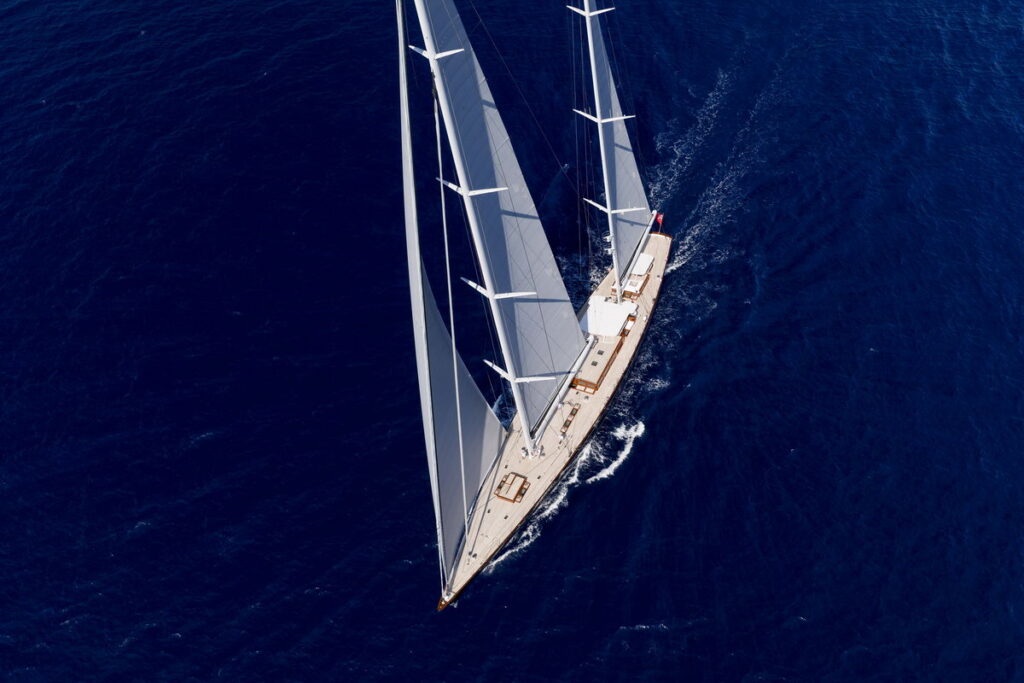
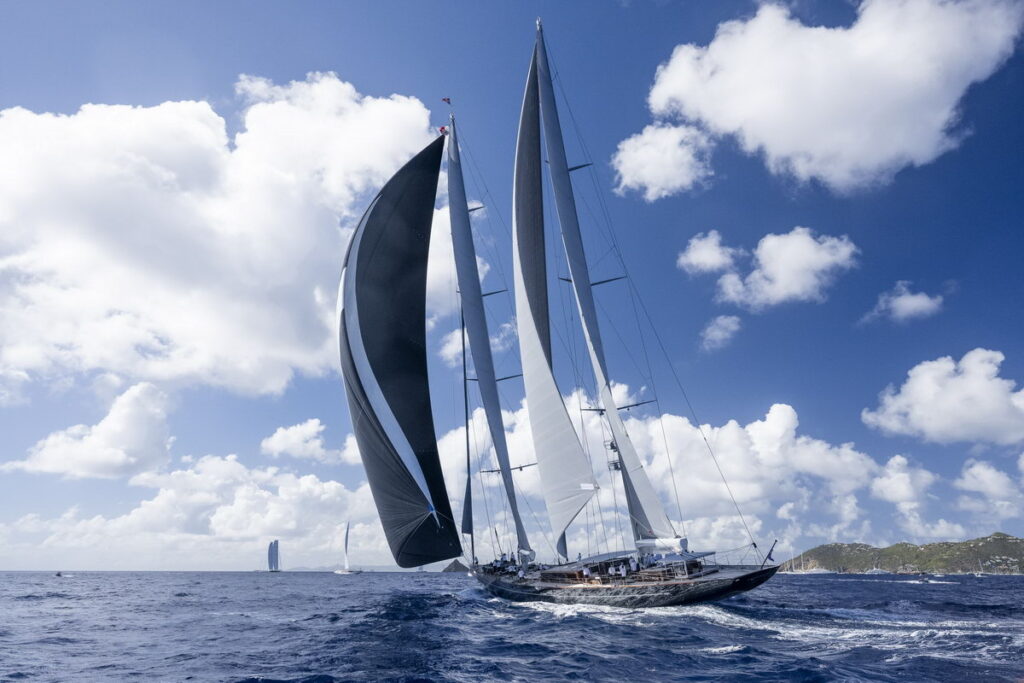
To ensure that the new Aquarius delivers rocket-like regatta performance alongside luxurious world-cruising capabilities, the design team made a pivotal structural choice early in the planning process. Prioritizing raw sailing performance over canal accessibility, the owners consciously opted for a powerful split rig setup that deliberately exceeds the height limits required for Panama Canal transit. Constructed from lightweight, high-strength Alustar aluminum alloy and optimized through Royal Huisman’s advanced weight-saving structural design methods, the hull provides an ultra-strong yet lightweight foundation for performance sailing.
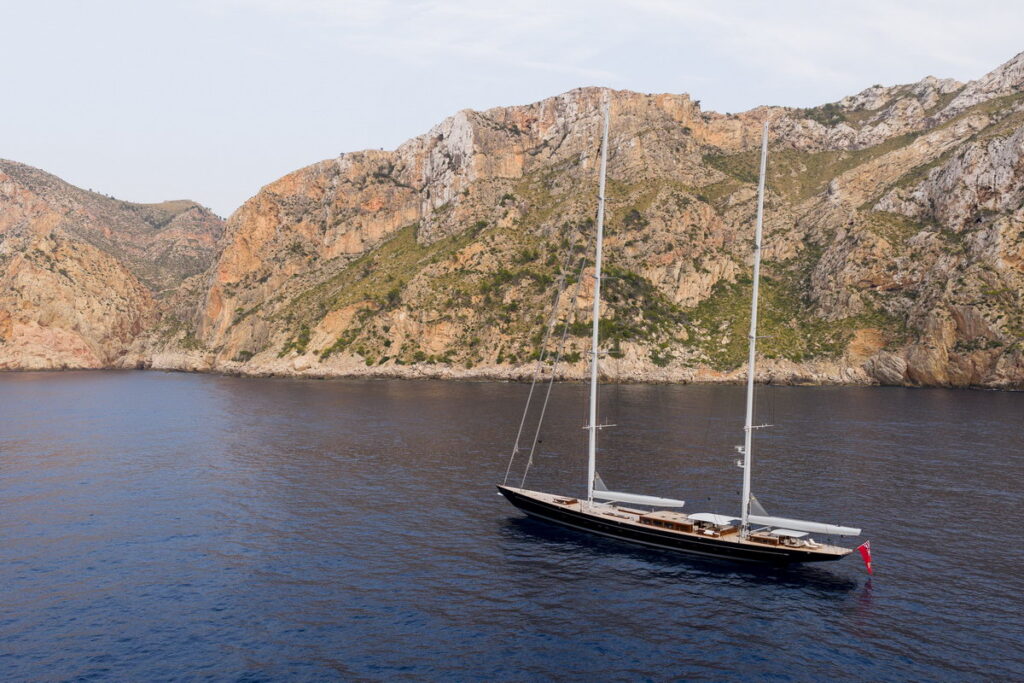
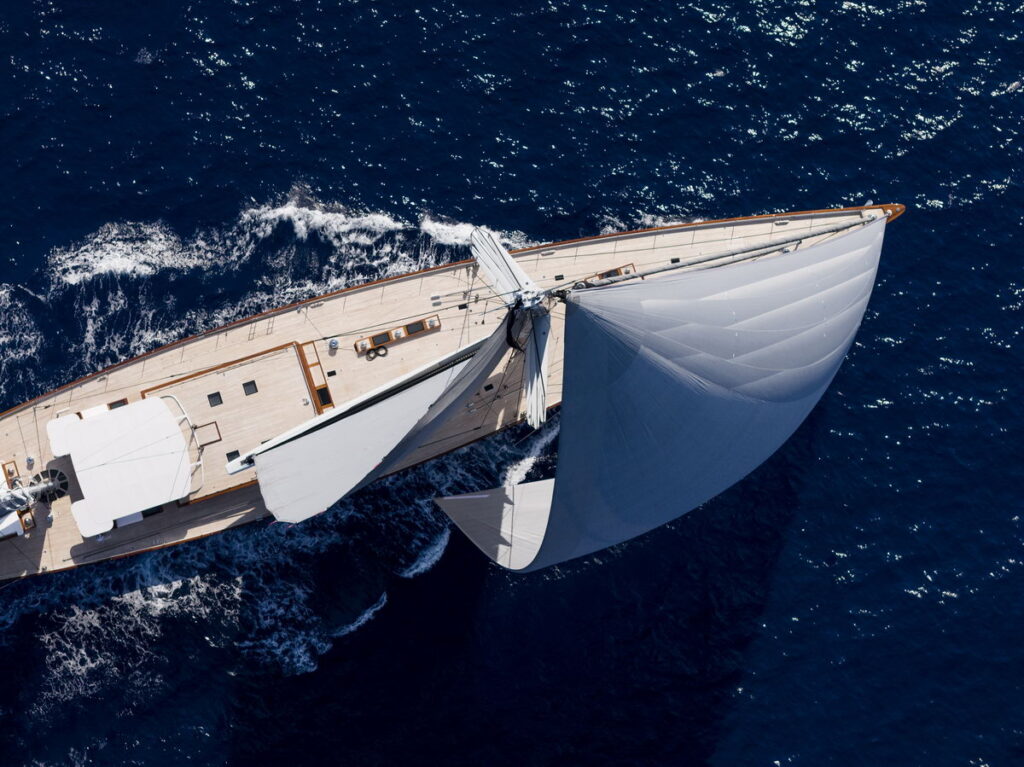
The yacht’s formidable sail setup includes a 67.5-meter main mast and a 61-meter mizzen mast, both crafted in high-performance carbon fiber by Rondal and paired with Carbo-Link elliptical carbon rigging. Together with custom sails developed by Doyle Sails, the vessel boasts a vast upwind sail area of 1,958 square meters and a staggering downwind sail area reaching 4,671 square meters. To complement this expanded sail plan, a massive 76-ton lifting keel replaces the previous vessel’s fixed keel, allowing the draft to extend from 4.8 meters for shallow anchorages down to 7.6 meters for maximum stability and speed while underway. During sea trials, Aquarius easily clocked speeds of 15 to 16 knots on a reach using standard cruising sails, while demonstrating impressive speeds exceeding 10 knots in a gentle breeze of just 7 knots of wind. Managing the immense structural loads under sail is made possible through 16 captive winches by Rondal and an innovative electric steering-assist system by Edson, which grants the helmsman precise control and direct real-time feedback.
Stepping inside, Mark Whiteley Design maintained the signature aesthetic described as New England Relaxed Elegance. Hand-painted off-white paneling pairs harmoniously with satin-finished Swietenia American mahogany cabinetry, clear-finished wood floors, and polished nickel hardware. The main salon is 62 percent larger than before, facilitating flexible dining configurations for up to 12 guests alongside unobstructed social seating areas. Beneath this traditional, elegant exterior lies cutting-edge semi-hybrid marine technology. The primary propulsion package features a powerful 900 kW MTU main engine equipped with a gearbox-mounted shaft generator that efficiently powers hotel loads while underway. Furthermore, two fixed-speed generators charge a 134 kWh battery bank designed for peak shaving, which maximizes overall energy efficiency, dramatically reduces operational noise, and streamlines power distribution across all systems. Having already covered nearly 20,000 nautical miles during her first 18 months of operations -spanning transatlantic passages, high-latitude voyages through the Norwegian fjords, and competing in the 2026 St. Barths Bucket regatta- the new Aquarius stands as a true masterclass in modern custom yacht building.