


First on-water trials validate performance, handling and design vision.
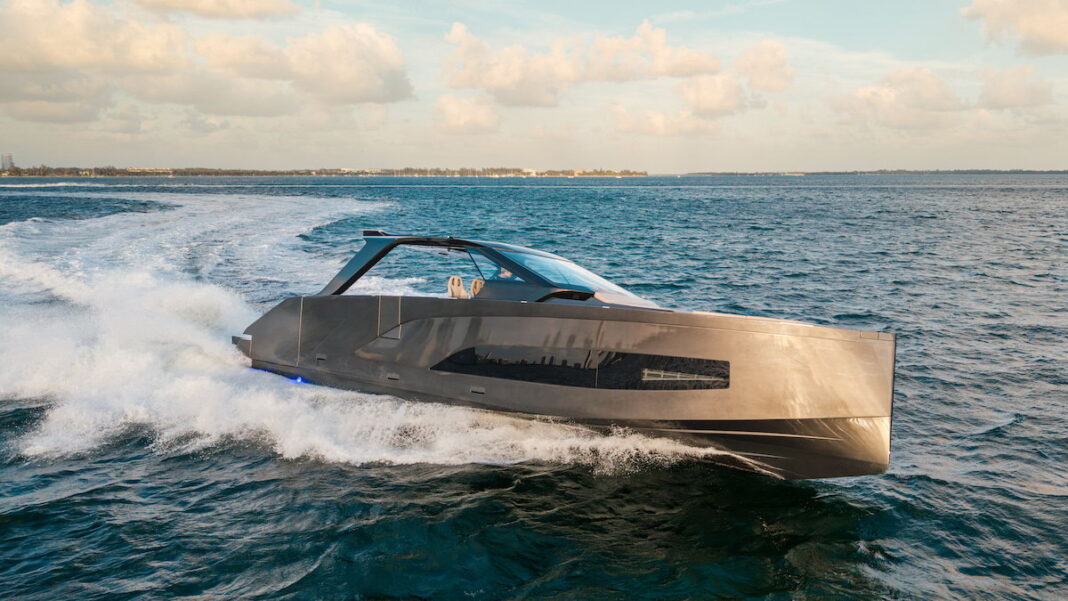
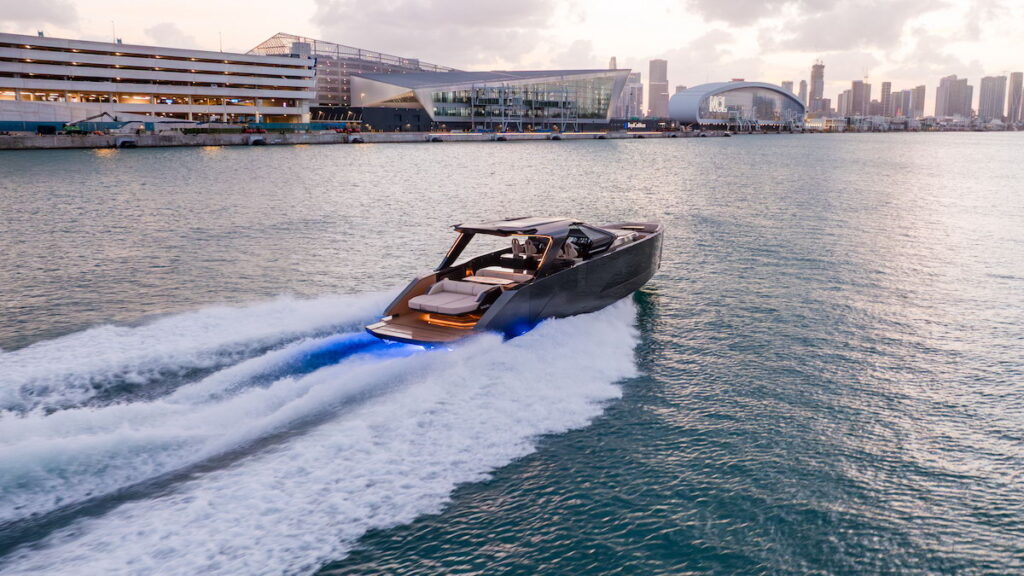
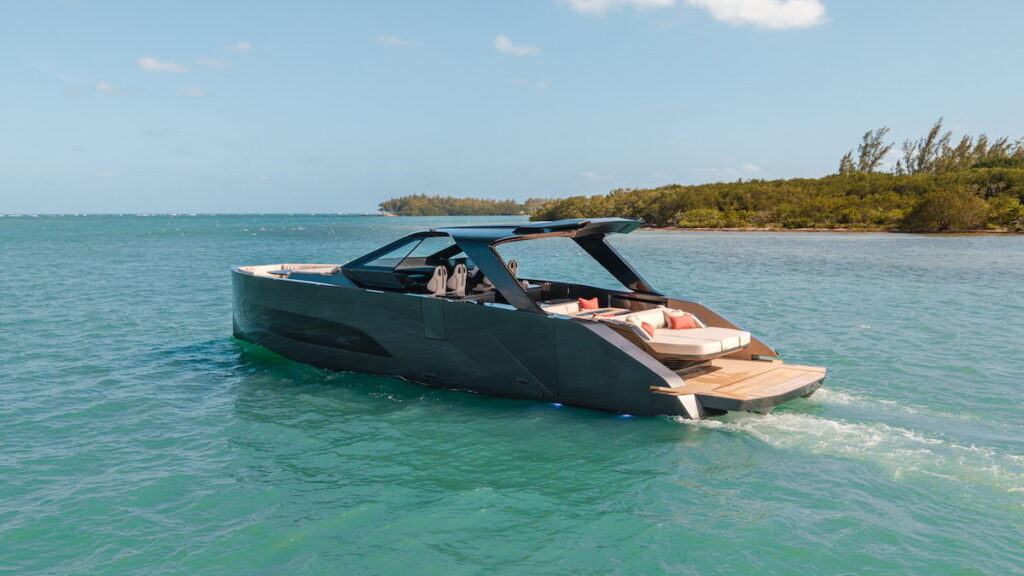
Following its world debut at the 2026 Palm Beach International Boat Show in March, the Manari 52 has completed sea trials in the open waters off Miami. And the results speak clearly. New photography, shot underway for the first time, captures what numbers alone can’t, a yacht that looks as purposeful in motion as it does at the dock. The trials offered the first real test of the philosophy behind Manari Yachts. For the new Miami-based brand, performance and refinement are not a trade-off, but a shared starting point.
Performance proven at sea
Equipped with advanced twin Volvo Penta IPS D8-800 engines, the Manari 52 reached a top speed of approximately 37 knots under trial load conditions – 70% fuel, standard equipment, three persons onboard – with an optimal cruising speed of 24 to 26 knots. Next units with different engine setups are projected to reach up to 47 knots, reflecting the platform’s headroom beyond its current configuration. Fuel consumption measured 140 to 160 litres per hour at cruising speed and 220 to 240 litres per hour at top speed. With roughly 2,500 litres of fuel capacity, the yacht demonstrated a cruising range of 350 to 400 nautical miles at optimal speed, enough to run Miami to Nassau with ease and margin to spare. Trials were conducted off Miami in Haulover Inlet. Conditions included 10 to 15 knot winds and wave heights of 0.8 to 1.2 metres, a moderate short-period chop typical of South Florida, chosen deliberately over flat water.
On the water
What stood out was not any single figure, but the way the yacht behaved when pushed. Tight turns completed with minimal heel and almost no speed loss. Short-period chop absorbed cleanly, without the slamming that plagues less considered hulls in this segment. The ride remained notably dry, not just at the helm, but throughout the cockpit and exterior guest areas. At speed, the Volvo Penta IPS platform delivered immediate response and precise directional control. Low-speed handling, managed through joystick control, proved equally confident: the kind of maneuverability that matters as much in a crowded marina as it does offshore. At the helm, noise levels held between 70 and 74 dB(A) at cruising speed, with vibration kept to a minimum through the IPS mounting strategy and the yacht’s insulation approach.
Engineered around the platform
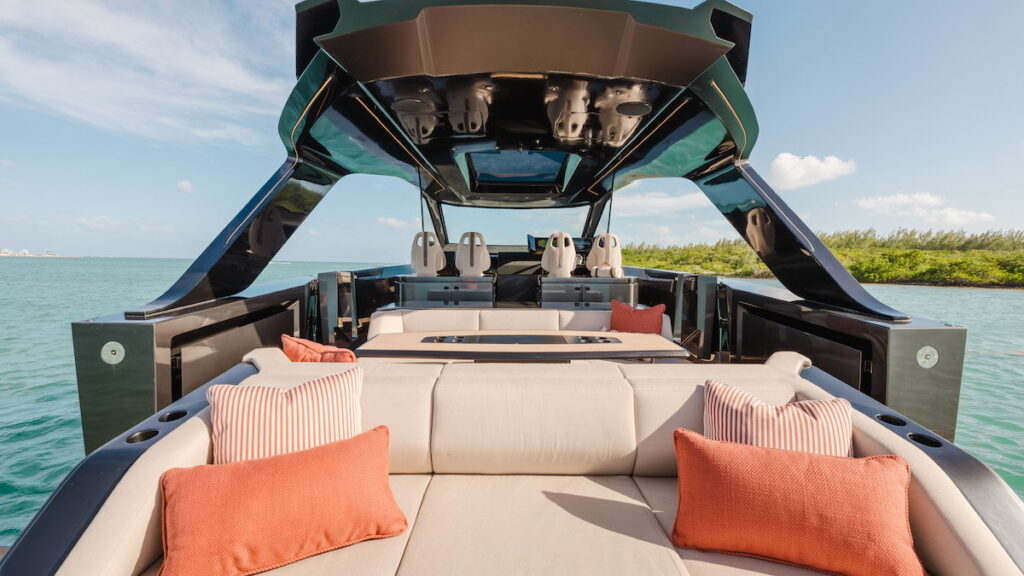
Developed in collaboration with Mulder, who are responsible for hull design, the Manari 52 was built around the Volvo IPS system from inception – pod positioning, a reduced shaft angle for improved efficiency, and structural layout all refined through extensive studies rather than compromise. The hull combines deep-V geometry with progressive deadrise and optimized spray rails, supported by advanced lamination techniques that reduce vibration without sacrificing rigidity. The naval architecture and exterior design were developed in close coordination, with aerodynamic efficiency considered alongside visual identity from the outset. The result is a yacht that feels solid and resolved underway. No flex, no drama, no noise that shouldn’t be there. The helm continues that logic into the driver’s environment – minimalist in layout, digitally integrated, and designed around visibility and ergonomics rather than decoration.
A benchmark, not a contender
The Manari 52 does not arrive in the 52-foot segment looking for a place at the table. With successful performance during sea trials, it arrives with something harder to manufacture than a striking design: a proven result – crafted for those who know.