



Hermès debuts its 2026 home collection in Milan, featuring an immersive beechwood installation that reimagines interior design through geographic coordinates.
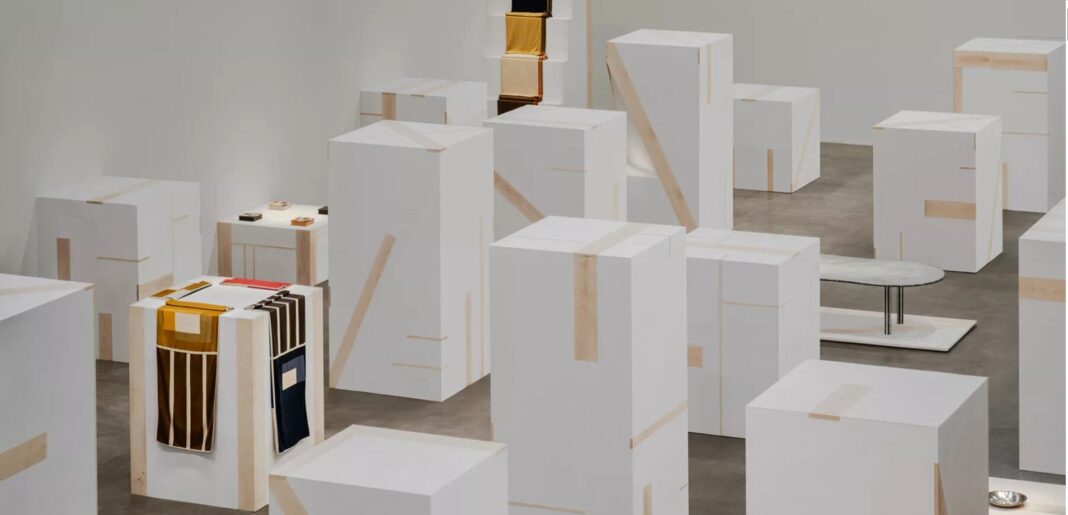
To mark the opening of Milan Design Week 2026, Hermès has unveiled its latest home collection within a striking architectural installation composed of varying beechwood volumes. Designed by architect Charlotte Macaux Perelman, the space functions as a loose grid of raised plinths and low blocks, creating an immersive environment that challenges traditional notions of interior display. By treating design objects as fixed coordinates on a map, the installation invites visitors to navigate the space like travelers, discovering how placement and alignment define our perception of a room.
Objects as Structural Coordinates
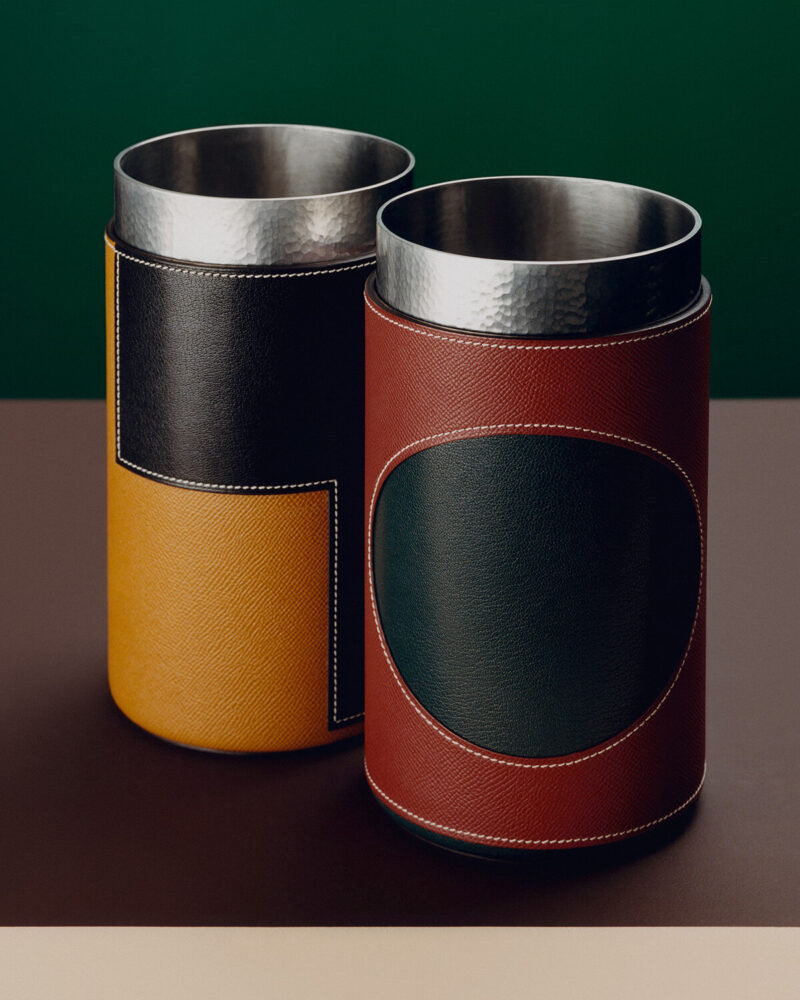
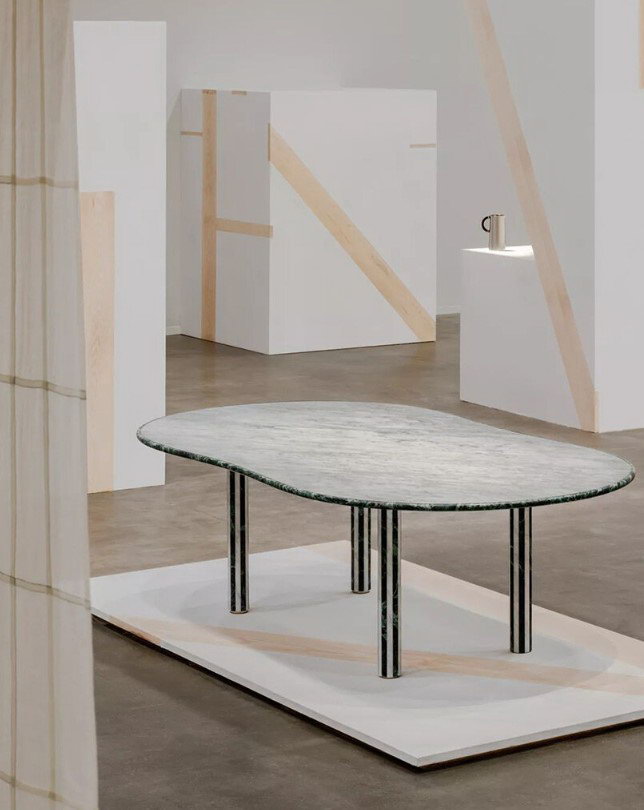
The layout, envisioned as a low-lying urban landscape, grants the pieces of the collection a structural significance. At the center of this wooden topography sits a marble table by Barber and Osgerby, featuring a soft figure-eight silhouette. Despite the inherent weight of the stone, its slim legs and equestrian-inspired marquetry surface lend it a sense of airy refinement. This central element serves as a landmark, around which other objects—such as hammered palladium vessels -are strategically positioned. These vessels, occasionally wrapped in leather or horsehair, shift from reflective to matte finishes depending on the viewer’s angle, creating a quiet yet consistent material rhythm throughout the “city.”
A Dialogue of Materials and Geometry
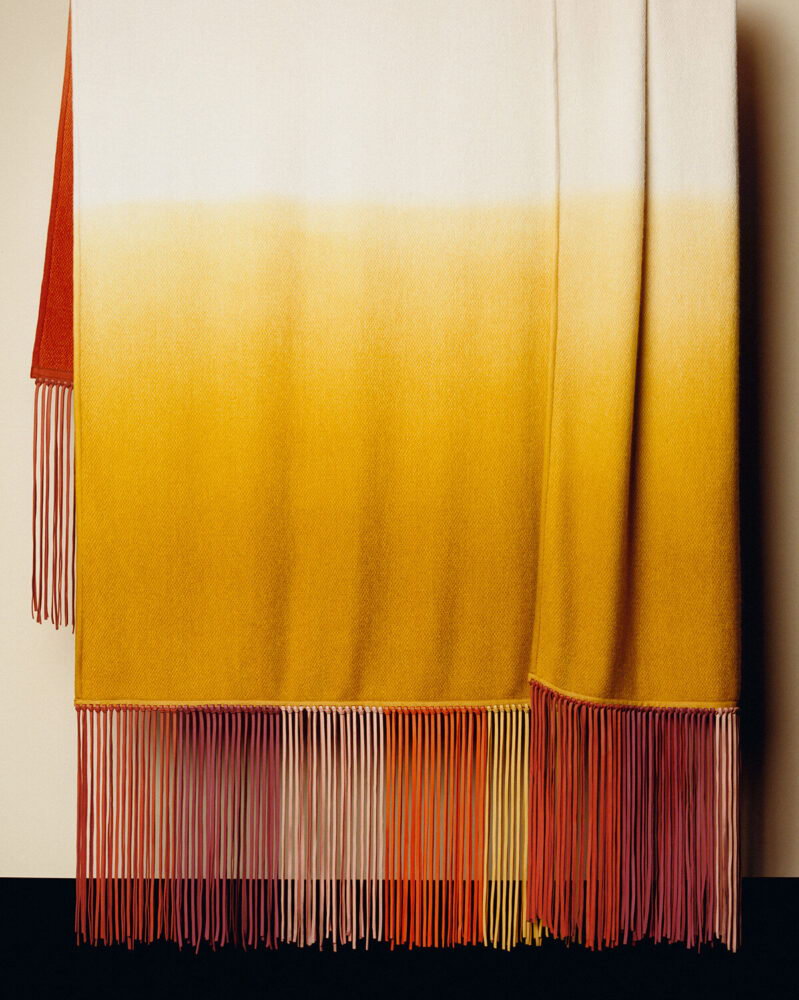
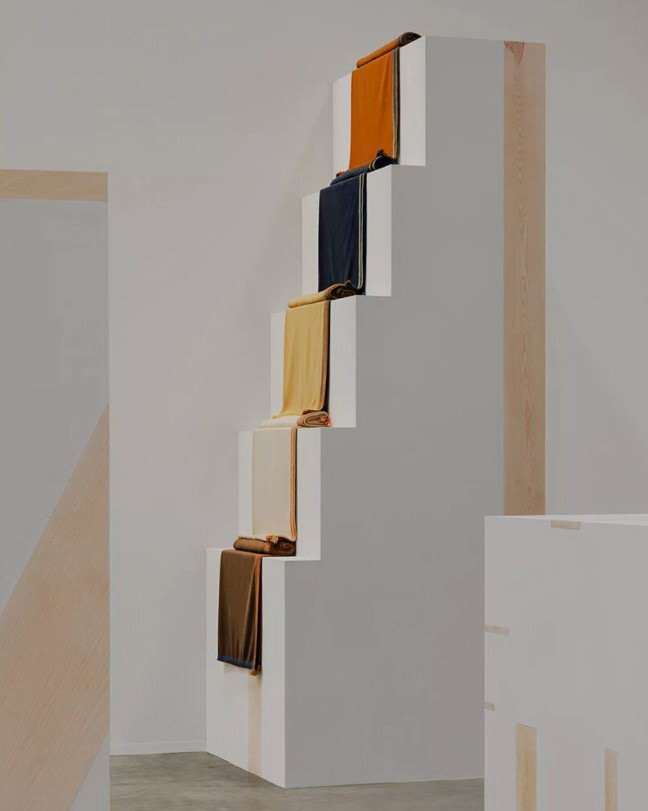
The strength of the 2026 collection lies in the intimate relationship between the objects and the geometric surfaces they occupy. Leather marquetry boxes introduce vibrant color blocks that mirror the installation’s grid, while baskets adorned with small circular appliqués appear as points scattered across a field. This theme of structured placement extends into the textile collection; cashmere throws are transformed through resist-dyed patterns and intricate stitching. Drawing on the Korean bojagi technique, some pieces use visible seams to organize their surface into subtle grids, while others feature ribbed edges inspired by equestrian webbing to provide form and stability to the fluid fabric.
The Art of Shifting Perspectives
The experience of the Hermès installation is defined by movement rather than a single focal point. Because the heights of the beechwood plinths vary, the visual relationship between the objects constantly evolves as one walks through the paths. This design encourages a slower pace of exploration, as every step reveals a new alignment or a hidden detail in the interplay of forms. By focusing on the steady build of these relationships, the presentation demonstrates that the beauty of a home lies not just in the objects themselves, but in the intentional ways they are arrayed in relation to one another.