


From bold new cities to groundbreaking eco-structures, here are five futuristic architectural marvels that could redefine our world.
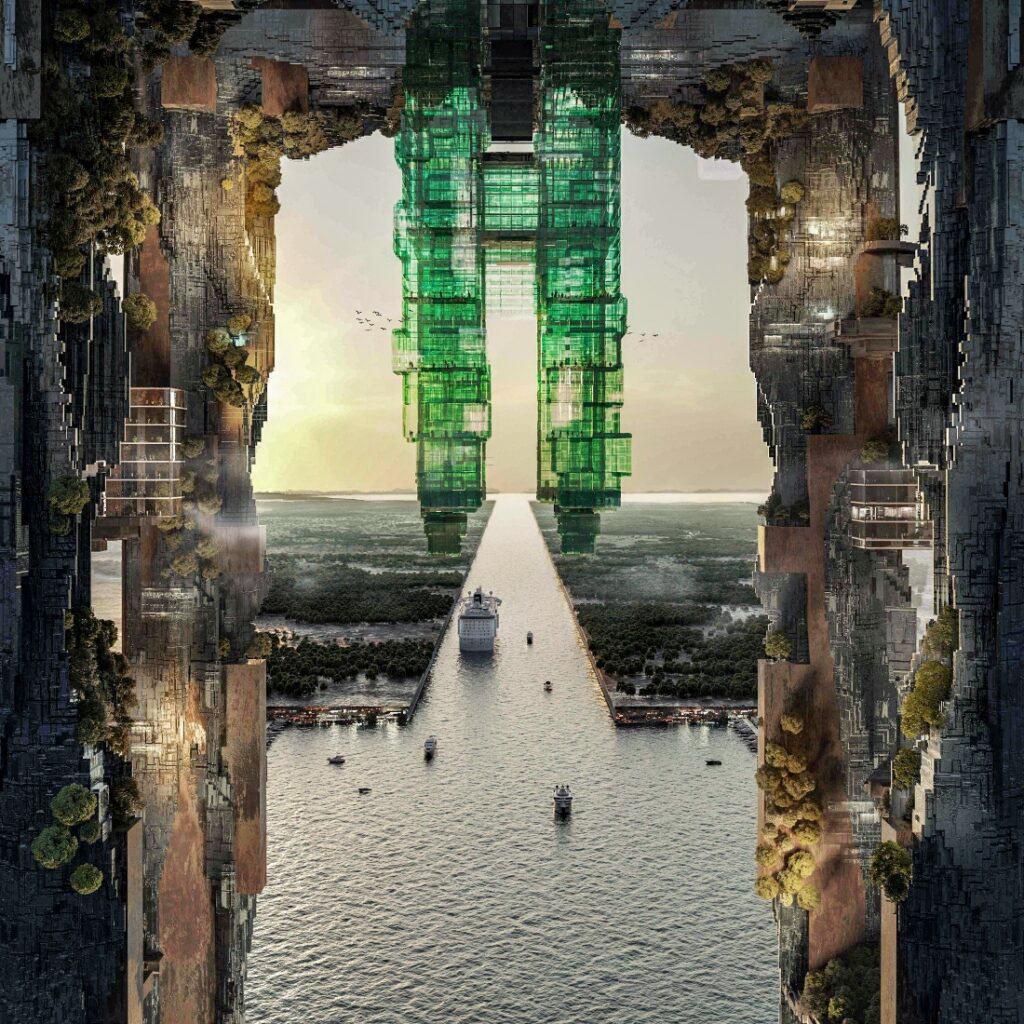
The Line – Saudi Arabia
A radical manifesto of urban reinvention, challenging everything we know about how cities are designed. Envisioned by Crown Prince Mohammed bin Salman as the centerpiece of the NEOM project, it proposes a car-free city built vertically, fully powered by renewable energy, and stretching across the desert as a single linear megastructure. Celebrated as one of the boldest—and most controversial—visions of the 21st century, The Line aims to redefine how people live, move, and interact. Yet, its realization faces mounting challenges. Originally planned to extend 170 kilometers, recent reports suggest that only a small fraction may be completed within the next decade. Whether futuristic utopia or ambitious dream, The Line sparks a global debate on the future of urban life.
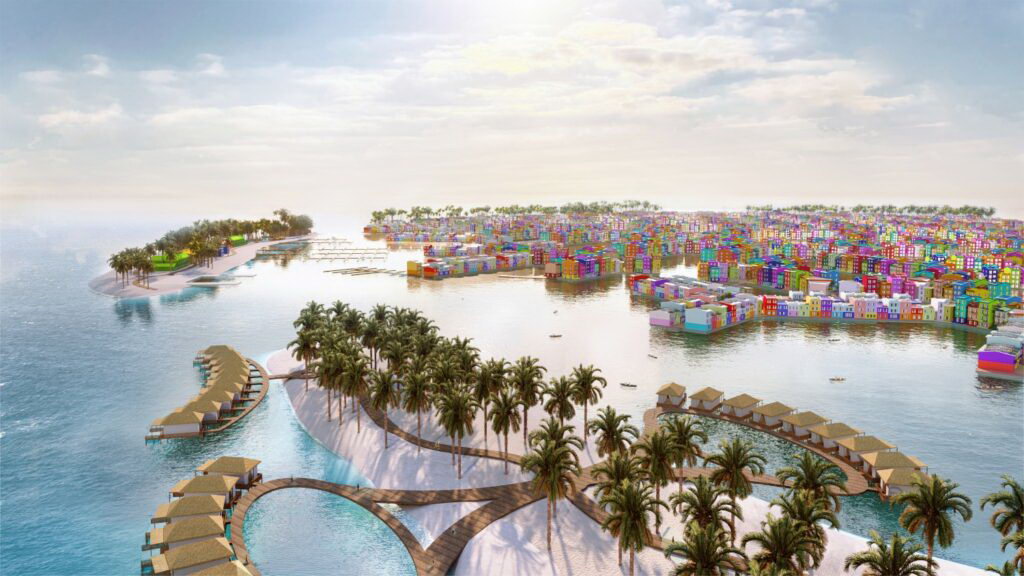
Floating City – Maldives
This first-of-its-kind “island city” offers a revolutionary approach to modern sustainable living perched against the backdrop of the azure Indian Ocean. Set in a warm-water lagoon 10 minutes by boat from the Maldivian capital, Male, and Male International Airport, it’s the world’s first true floating island city – a futuristic dreamscape finally poised to become reality. The city has a nature-based structure of roads and water canals resembling the beautiful and efficient way in which real brain coral is organised. The idea of having brain coral as the leading concept is that the goal of living with nature and learning to improve and respect natural coral is at the heart of the development, which leads to new knowledge emphasising the responsibility Maldives takes as the centre for coral protection in the world.
Louvre Abu Dhabi – United Arab Emirates
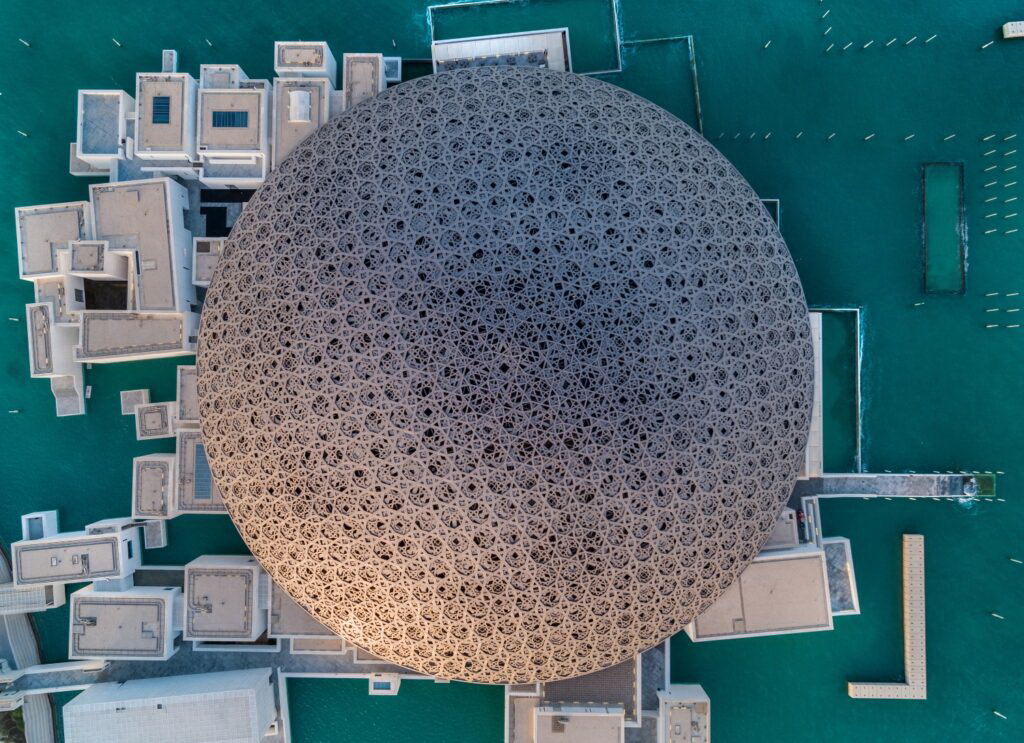
The Louvre Abu Dhabi stands as a striking symbol of modern architecture and culture. Surrounded by water, this museum-city recalls the charm of an Arabian medina, with 55 buildings—23 of them galleries—inspired by the region’s low-rise homes. Visitors can wander shaded walkways, pause to reflect, and enjoy the interplay of art, sea, and sky. At its heart rises Jean Nouvel’s breathtaking dome: a silvery structure of 7,850 stars layered in intricate geometry. Though weighing as much as the Eiffel Tower, it appears to float effortlessly, filtering sunlight into the mesmerizing “rain of light.” This ever-changing spectacle, inspired by Abu Dhabi’s palm trees, transforms the museum into a living dialogue between nature and design—an architectural wonder where tradition meets innovation.
Read more on: Skipper ONDECK #79