



Designing sustainable yachts means reducing environmental impact through smarter construction, efficient hulls, hybrid systems, and eco-friendly interiors without compromising luxury or performance.
Stefano Vafiadis
Yacht Designer at Studio Vafiadis
Sustainability in Yacht Design: such a great topic. Dear among enthusiasts and boat owners but so many times treated with heavy loads of rhetoric and propaganda. I’d therefore like to share my experiences as a designer (currently building 8 boats over 35 meters) without the rhetoric and slogans heard all the time, letting only the facts and experience of building numerous boats, many of which I would say “sustainable”, speak for themselves.
Construction
An objectively relevant fact when discussing sustainability in new builds (because it must be carefully distinguished from the another important category of the existing fleets), is that building a boat, according to actual energy balances, is equivalent, on average, to a full 10 years of its life and cruising cycle. Which means that construction is one of the phases with the greatest environmental impact. For this reason, in addition to the sustainability of the boat itself, we should also consider the sustainability of where it is built: for example, whether renewable sources are used to produce energy for the construction of the boat’s structures and interiors.
An excellent example of how this phase can be optimized and the consumption of fossil and non-renewable energy sources minimized is the Baglietto shipyard, which for years has been committed to building its zero-impact boats using solar energy, produced by panels on the roofs of its warehouses in La Spezia, Italy where furthermore a clearly visible table with instantaneous kW values is also used to raise awareness among visitors to the shipyard. The shipyard is also currently testing an on-site facility for producing hydrogen from seawater through the separation of molecules by electrolysis; this system could potentially be used on board its vessels in the future, thus creating a complete virtuous cycle: from construction to the entire life cycle of the boat.
Hulls & Drafts
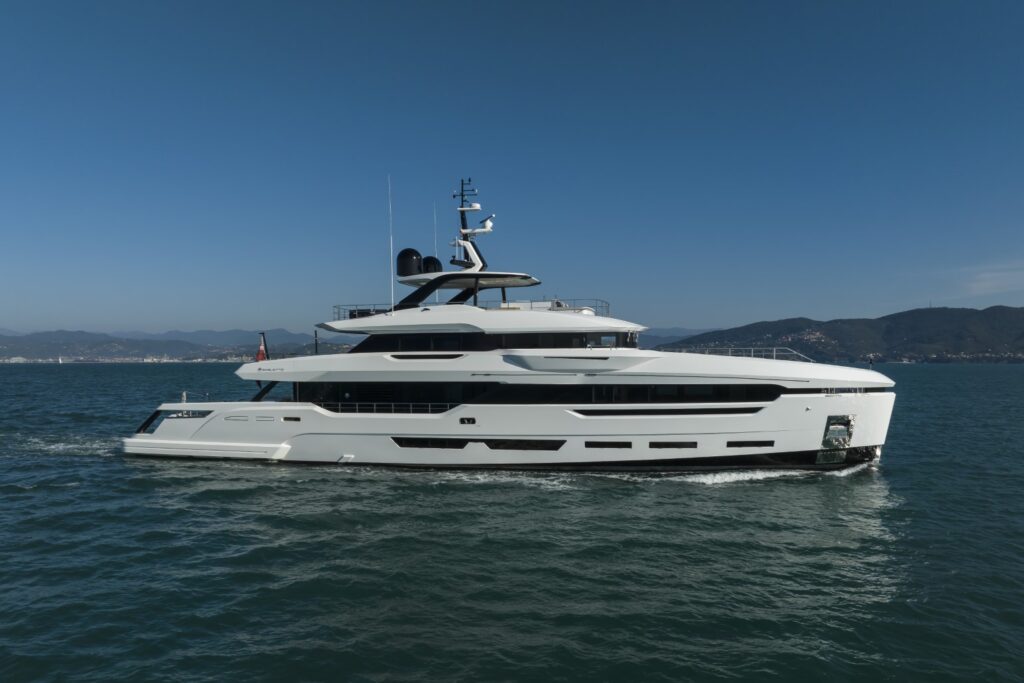
Another very important issue for designers is creating hulls that perform better and significantly reduce fuel consumption. It’s perfectly understandable that zero impact, and therefore zero emissions, is the ultimate goal, but in my opinion, even a substantial reduction in fuel consumption would still be desirable, without necessarily being too rigid on the issue and allowing the natural course of technology and development to lead us toward this goal. This is also because, considering the overall impact boats have on the global industrial landscape, this is limited by their small production numbers, compared to commercial shipbuilding and construction, which stand out with overall gigantic numbers of production, especially on large, high-end boats that represent the pinnacle of production. This obviously doesn’t excuse owners and manufacturers from ignoring the issue, but we must also realistically understand where real savings can be made in terms of fuel consumption and pollution, and where these savings are simply mere propaganda.
For example, investing in tank tests to improve the hydrodynamic coefficients of hulls is an excellent solution for improving fuel consumption. What type of bow should you use: straight, normal, or reverse? Should you use a bulbous bow? Even a prismatic one, like the recent one on patrol vessels, which consists of an extension of the hull that then stands out from the hull. The market and even nautical culture are already moving in this direction: while once the mantra was to boast about your vessel’s speed, today fuel consumption (and even quietness) are becoming the new parameters to be proud of and brag about to your friends. Comfort and low fuel consumption are the new status. Another very interesting idea is to use multiple hulls. Catamarans, for example, are highly fuel-efficient and can provide significantly lower fuel consumption while cruising. Furthermore, having a nearly square shape relative to their length, they can accommodate large solar panels, providing a significant energy contribution to hotel loads (i.e., consumption generated by life on board, not by the boat’s propulsion engines).
Hybrid System
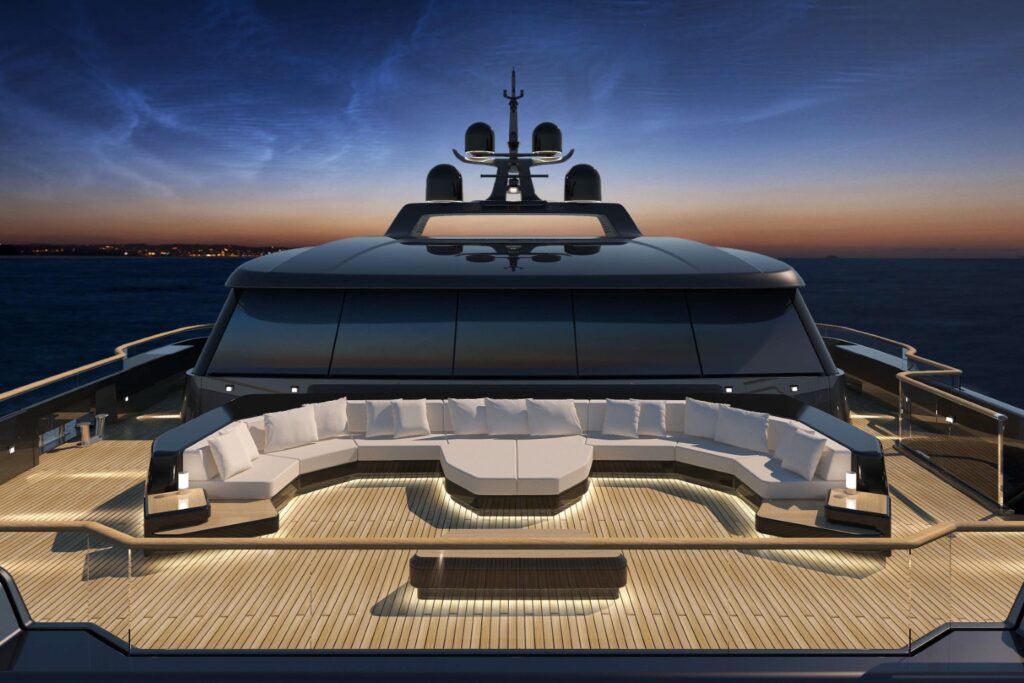
Even engines with hybrid propulsion systems (recently adopted on the new 85-meter vessel under construction by Golden Yachts in Greece, for which we also designed the exterior lines) also generate significant reductions in fuel consumption while cruising and beyond, in addition to the possibility, limited in terms of miles and hours of navigation, of being able to operate solely on electric power. Using battery packs and generators that store electrical energy from the rotation of the propeller shafts (unfortunately, KERS braking energy storage systems, like those found in cars, are not available on boats), the motion of the propellers can be converted into electrical energy, which is then managed and distributed by the DC BUS, which recalibrates the electrical energy to various devices based on current demands, whether at sea or at anchor. It’s very important to distinguish these two phases because both have a significant impact on consumption, but they are very different in terms of equipment. Air conditioning, appliances, and general onboard consumption also have a significant impact, where efforts can be made to reduce consumption. At this point, a very interesting and almost uncomfortable question arises: would it be right to make compromises in favor of the environment?
I believe the best answer is: it depends. Understanding how much a boat is used and then working to reduce consumption from the outset would be more desirable than compromising the onboard lifestyle. Today, for example, no one wants to sweat on board or lack the comforts and conveniences they rightfully enjoy at home or in a hotel, or compromise their lifestyle. And that’s understandable from my perspective. We must also respect the pleasure boating vocation, and therefore the enjoyment that boats provide, but at the same time, we must also not leave the air conditioning on with the doors open, as one owner complained at the last meeting, asking me: can something be done?! At that point, the designer and technicians step in. They must, on the one hand, safeguard the pleasure of life on board, but also protect fuel consumption and actively discourage bad behavior: for example, by automatically turning off the system after a few minutes with the doors open or by having them close automatically.
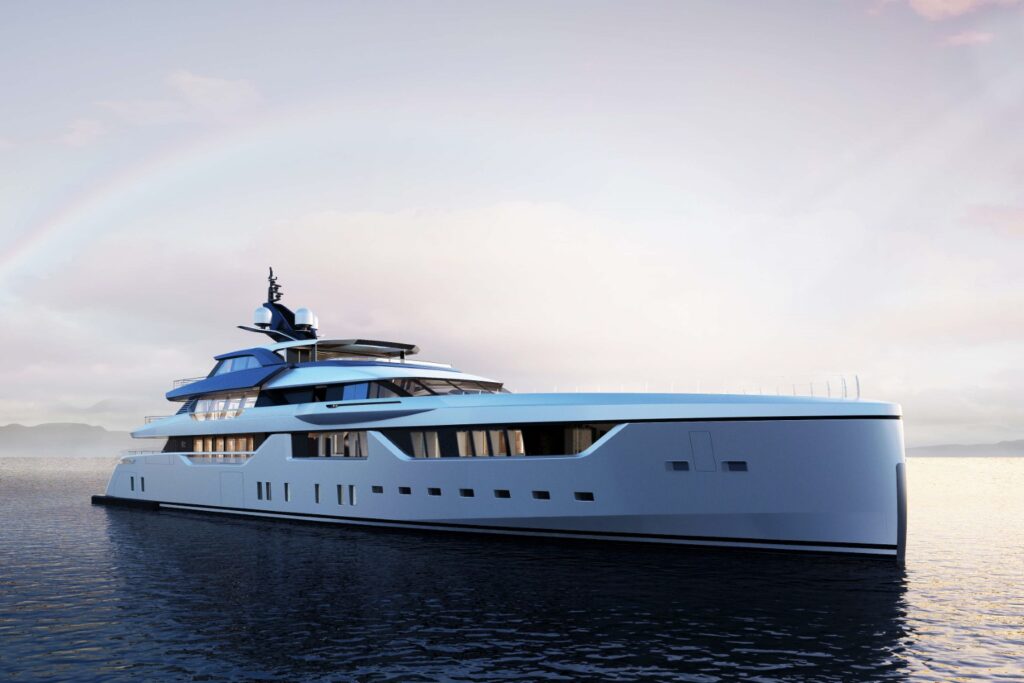
In addition to these systems, there’s currently a lot of talk about e-fuel and hydrogen-powered propulsion. Although they are valid alternatives to diesel, they currently compromise an average of 30% of the hull volume due to lower efficiency and therefore an increase in fuel tank volume. While these systems offer a concrete opportunity to reduce pollution, they come up against a sad and objective fact: the current infrastructure is not ready for boats with this type of propulsion. Many projects and shipyards that have attempted to produce similar boats have halted future projects due to a shortage of this type of fuel on the market and the resulting impossibility of supplying it. This is a sad testimony and small consolation in being too far ahead of the curve in our nautical sector compared to the rest of the industry. Nuclear power (even) seems to have come back into vogue as a possibility for a not-too-distant future. The idea of containing enough power to propel a ship for decades in the space of a briefcase is far from a dream; on the contrary, it could be a concrete development, perhaps rightly overcoming some hesitation and mistrust towards this type of energy source.
Interiors
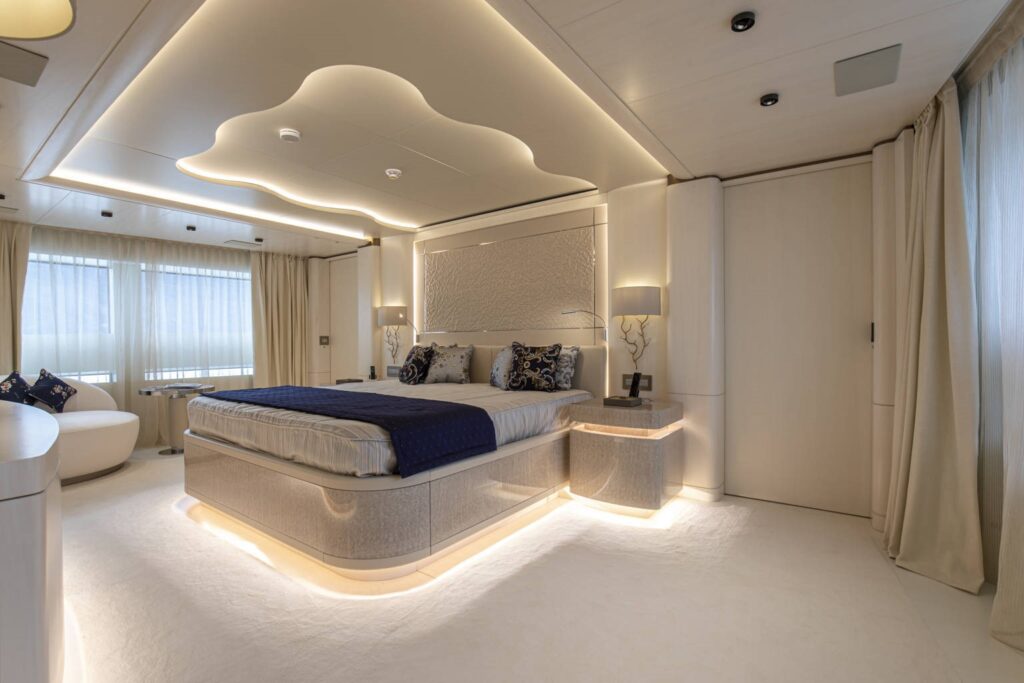
Even in the construction and design of interiors, a difference can be made, for example by using materials that are eco-sustainable and recycled, or potentially recyclable. Today, it’s no longer necessary to sacrifice the beauty and opulence of your interiors for the sake of the environment, as technology combined with nature offers us interesting alternatives that are both aesthetically pleasing and highly durable. For example, the eggshells used for the table tops and bedside tables in the master stateroom of the 60-meter O’Madeleine, by Golden Yachts, are proof that sustainable, recycled materials can be highly luxurious, while also being environmentally friendly and pleasing to the eye and touch.
Today, it’s possible to use wood (such as pre-composite veneers, which have been around for many years), leather, and fabrics completely recycled from production waste and old artifacts. Without any aesthetic or functional compromise, they offer increased resistance and extended durability. The important thing is to never forget sustainability, from day one to day one of the project. Because every action counts, every detail has its environmental impact. Having a conscience, culture, and understanding of one’s role in the creative/production process and then in life on board. Everything matters for the environment. Our journey shouldn’t burden the lives of others. On the contrary, it should improve them.