



SEA Index® launches new Air Quality Certification, benchmarking superyacht emissions to promote environmental transparency and protect local public health.
The Superyacht Eco Association (SEA Index®) today announced the launch of its new Air Quality Certification, a significant expansion of its environmental assessment framework for superyachts. This pioneering certification evaluates vessels based on their emissions of nitrogen oxides (NOx) and fine particulate matter (PM₂.₅), providing the yachting sector with its first dedicated benchmark for local air-quality impact.
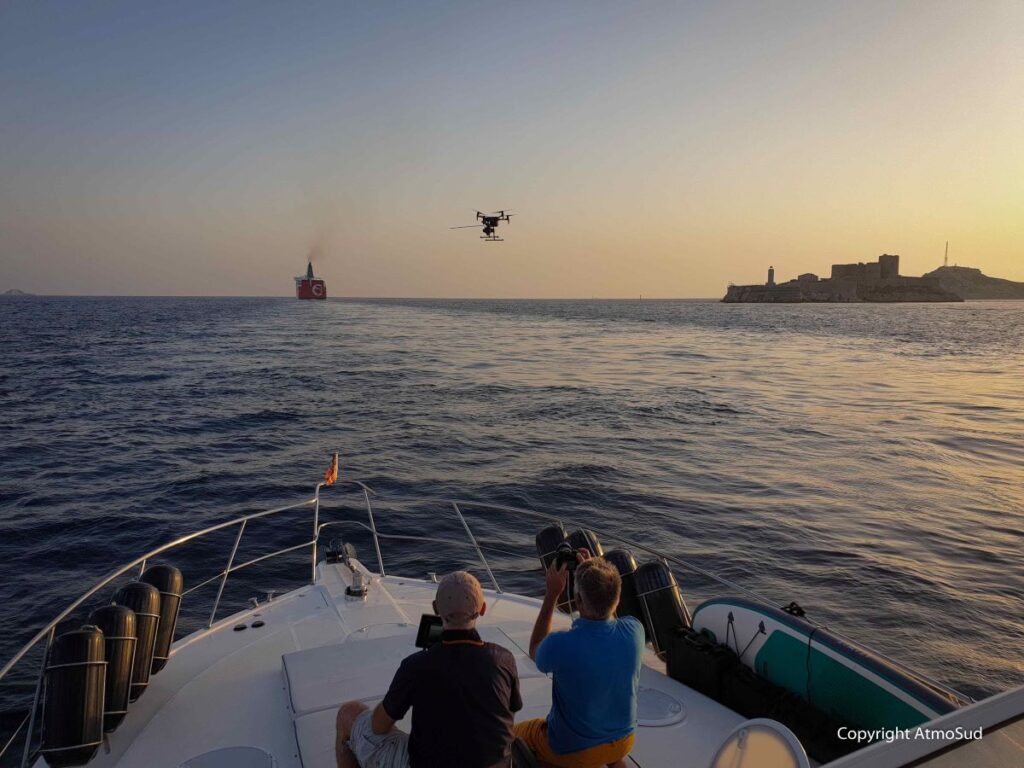
Developed in collaboration with AtmoSud, the air-quality observatory for Provence–Alpes–Côte d’Azur, the South Region, the new certification strengthens the SEA Index’s mission to deliver scientifically robust, third-party-verified tools that advance sustainable practices across the superyacht industry. It complements the flagship SEA Index CO₂ Rating, which remains the market’s leading reference for climate-impact evaluation and already includes hybrid propulsion, battery-supported systems and alternative-fuel technologies.
A growing focus on air quality in yachting
While CO₂ is a globally recognised climate priority, pollutants such as NOx and PM₂.₅ have direct, localised impacts on human health and coastal air quality. Superyachts spend much of their operational time at anchor or at berth, often in proximity to marinas, ports, and populated shorelines, making air-quality performance an increasingly important consideration, affecting not just the surrounding environment but also owners, guests, crew, and workers on board: “Air quality is not just an environmental concern; it is a prominent public health concern,” notes Prof. Pierre Charles Maria, President of AtmoSud. “Providing transparent, scientifically credible indicators helps both regulators and industry stakeholders better understand local emissions and work collectively toward solutions.”
The SEA Index® Air Quality Certification responds to this evolving awareness with a clear, sector-specific assessment that recognises yachts invested in less environmental impact and cleaner onboard technologies.
A scientific and transparent methodology
The Atmospheric Pollution Certification is built on a rigorous scientific foundation that includes:
- A representative operational profile
Using AIS data from 2,000 yachts over 24 metres, AtmoSud validated typical vessel behaviour throughout the Mediterranean, ensuring the rating aligns with real-world operations. - Fuel-consumption modelling aligned with international maritime standards
The methodology is based on globally recognised studies and remains fully consistent with the SEA Index® CO₂ Rating for methodological coherence. - Internationally recognised emission factors
Pollutants are assessed using the 2023 EMEP/EEA Air Pollutant Emission Inventory Guidebook, the European reference for maritime emissions modelling. - Integration of emission-reduction technologies
The rating accounts for proven onboard systems including:
•Selective Catalytic Reduction (SCR) for NOx
•Diesel Particulate Filters (DPF) for PM
•Alternative fuels such as methanol, where validated emission factors exist
These elements ensure yachts undertaking environmental upgrades receive appropriate recognition.
A clear, intuitive rating system
To facilitate ease of understanding across all stakeholders, owners, captains, shipyards, marinas, ports and regulators, the SEA Index Air Quality Certification uses the familiar 1-to-5-star classification, determined independently for:
•NOx emissions
•PM₂.₅ emissions
A combined Air Quality Rating consolidates these results into a single score.
•3 stars represents the performance of a typical modern yacht.
•4–5 stars denote high-efficiency vessels with advanced technologies or optimised power and auxiliary systems.
The rating remains fully aligned with the SEA Index® CO₂ framework to ensure clarity and continuity across all SEA Index certifications.
Strengthening the SEA Index® environmental toolkit
The SEA Index® now combines climate impact and air quality evaluations, making it one of the most thorough voluntary environmental assessment systems for superyachts worldwide, and the only system based on globally recognised maritime methodologies and verified by independent third parties. This evolution further positions Monaco at the forefront of responsible yachting and reinforces its ambition within the “Monaco, Capital of Advanced Yachting” initiative. Future developments may expand the methodology to include ultrafine particles, emerging clean-fuel pathways, next-generation propulsion systems, and additional pollutant categories as maritime science evolves.
A milestone for responsible yachting
Bernard d’Alessandri, SEA Index Superyacht Eco Association President & General Secretary Yacht Club de Monaco comments: “With the launch of the Air Quality Certification, the SEA Index® offers industry stakeholders a reliable, transparent, and internationally aligned environmental indicator. It is another step toward a future where exceptional yachting experiences coexist with environmental responsibility.”