


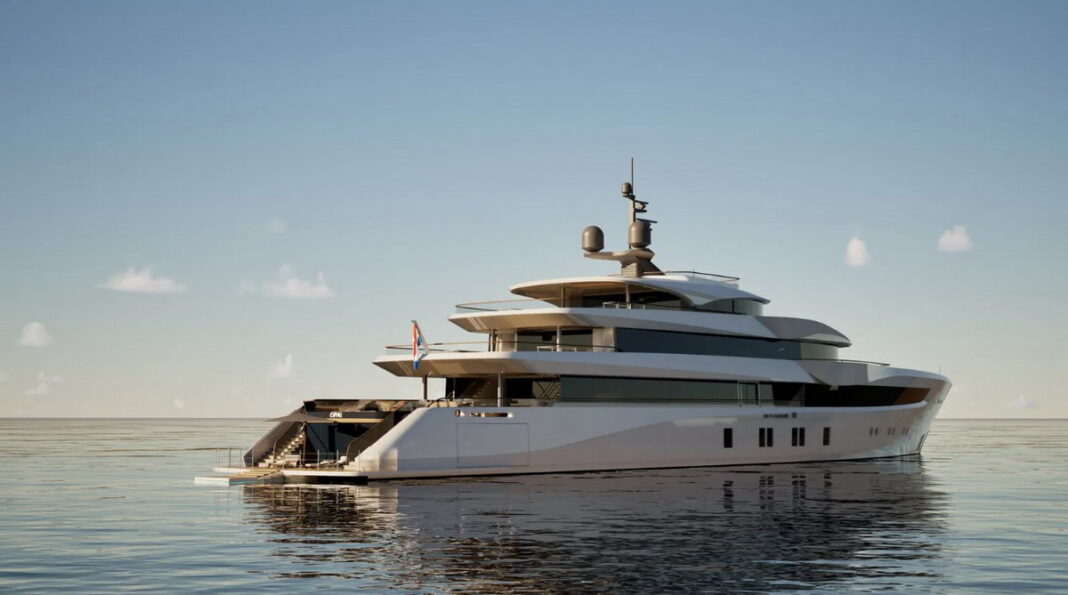
Mulder Design’s 70-meter Project Opal concept reimagines superyacht luxury by blending high-speed naval engineering with the serene, organic aesthetic of Caribbean villas.
The renowned Dutch studio Mulder Design has pulled back the curtain on the latest details of Project Opal, a 70-meter superyacht concept that seeks to bridge the gap between high-end naval architecture and the laid-back luxury of coastal living. First introduced to the industry in 2024, this ambitious project has evolved into a comprehensive design study that prioritizes “villa authenticity” over traditional maritime rigidity, offering a fresh perspective on how life at sea can feel like a permanent tropical escape.
A design philosophy rooted in the Caribbean
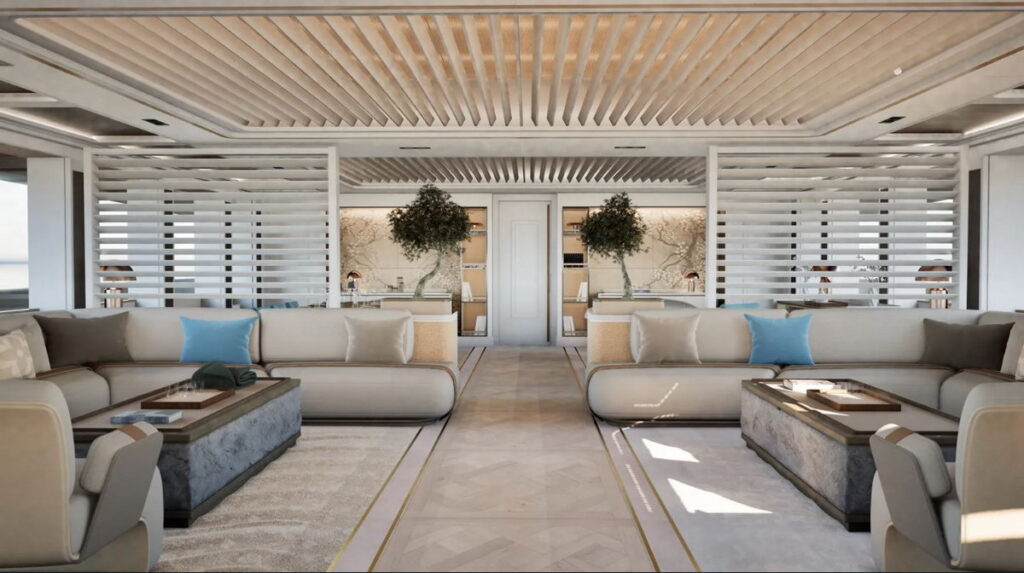
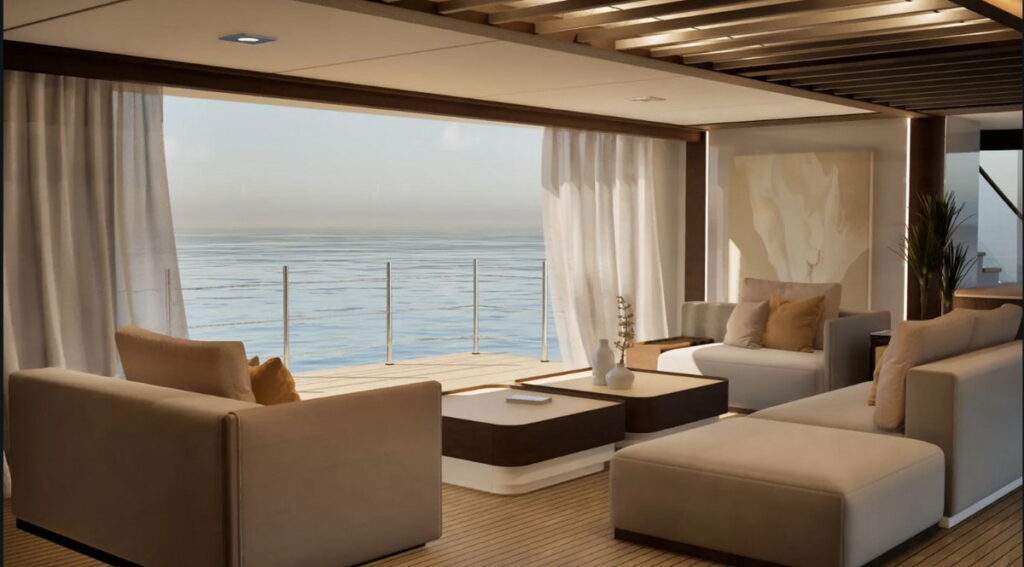
The core inspiration behind Project Opal is the serene, open-air lifestyle associated with Caribbean island villas. The design team has meticulously curated an interior palette that avoids the cold, clinical feel often found in modern yachting. Instead, the spaces are defined by weathered teak, leather-wood accents, and rough-hewn stone, creating a tactile connection to the natural world. Natural linen upholstery completes the aesthetic, ensuring that every room feels grounded and inviting. The goal was to create an environment where the boundaries between the yacht and the surrounding marine landscape feel almost non-existent.
Innovative interior mechanics and lighting
One of the most striking features of the main deck lounge is an automated wooden pergola system. This isn’t just a static architectural element; it is integrated with a kinetic light installation designed to mimic the shifting shadows and dappled sunlight of a real Caribbean terrace. This interplay of light and shadow is complemented by a bar crafted from raw stone and worked wood, which serves as a focal point for social gatherings. A long teak walkway bisects the lounge areas, featuring custom carpets with wave patterns and low-profile sofas that emphasize the horizontal, expansive feel of the interior.
Signature architecture and spatial flexibility
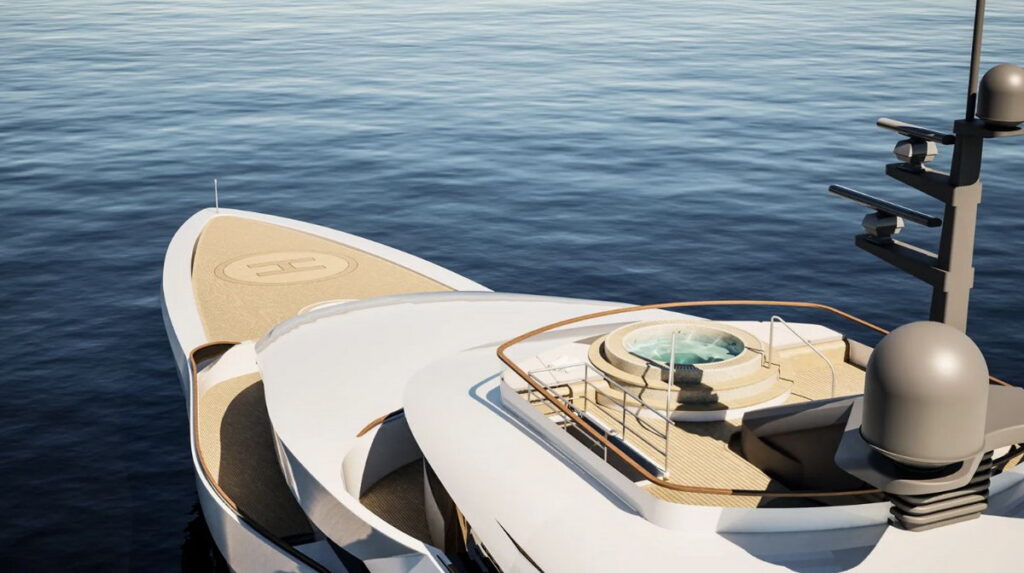
Project Opal incorporates several “signature Mulder Design” elements, most notably the flared bulwarks on the forward sections of the upper two decks. This architectural choice serves two purposes: it significantly enhances the line of sight from the interior and allows for a much larger private forward deck for the owner. While the current configuration includes a guest skylounge aft, the studio has emphasized the project’s inherent flexibility. The upper deck can be entirely reconfigured into a massive, dedicated owner’s deck, providing an unparalleled level of privacy and luxury for the primary residents.
Efficiency meets high-volume luxury
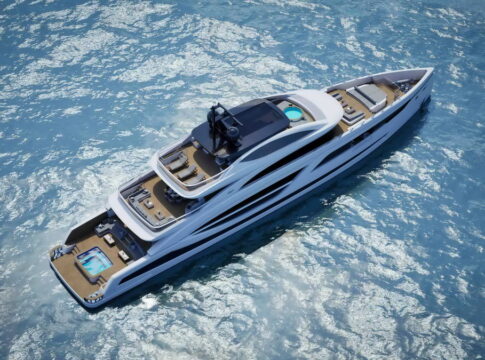
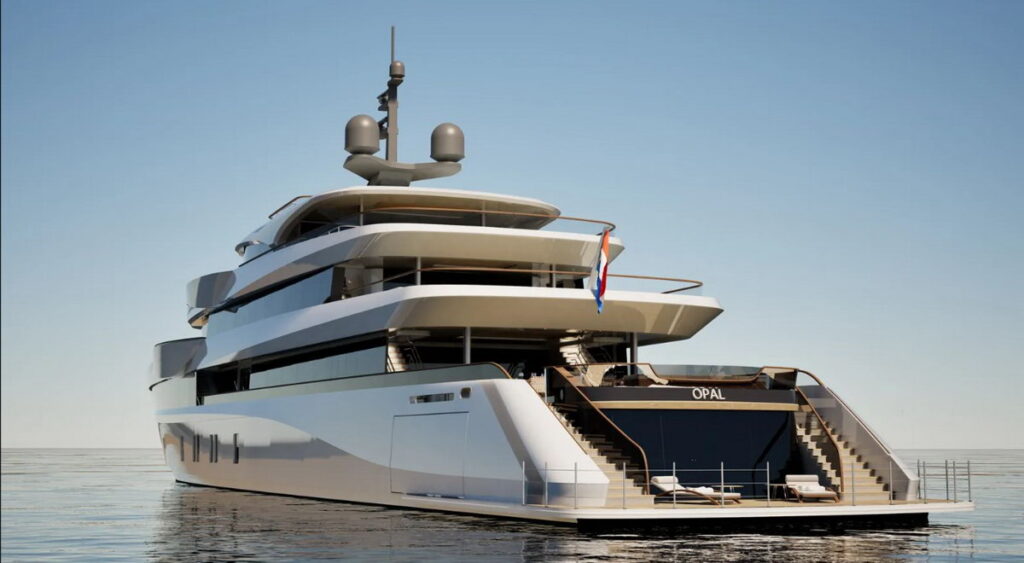
Beyond its aesthetic appeal, Project Opal is built upon a high-speed cruising hull platform—a hallmark of Mulder Design’s engineering prowess. Depending on the chosen engine package, this hull can increase speed by up to 30 percent compared to conventional displacement yachts of similar size. With a beam of 13 meters and a volume exceeding 1,400 GT, the yacht offers immense internal space without sacrificing performance. Practicality is also addressed through features like the “touch-and-go” helipad on the foredeck, a hidden observation deck with a spa pool, and a beach club at the stern that utilizes glass doors to merge with a generous swim platform.
A timeless exterior sculpted by the elements
In an era where yacht designs often lean toward aggressive or overly futuristic lines, Bas Mulder, the owner of the studio, has opted for a path of “calm and elegant lines.” The exterior styling is intended to be universally appealing and resistant to the fast-moving trends of the industry. By following the organic flow of waves and clouds, the yacht’s silhouette appears as if it were sculpted by the wind.
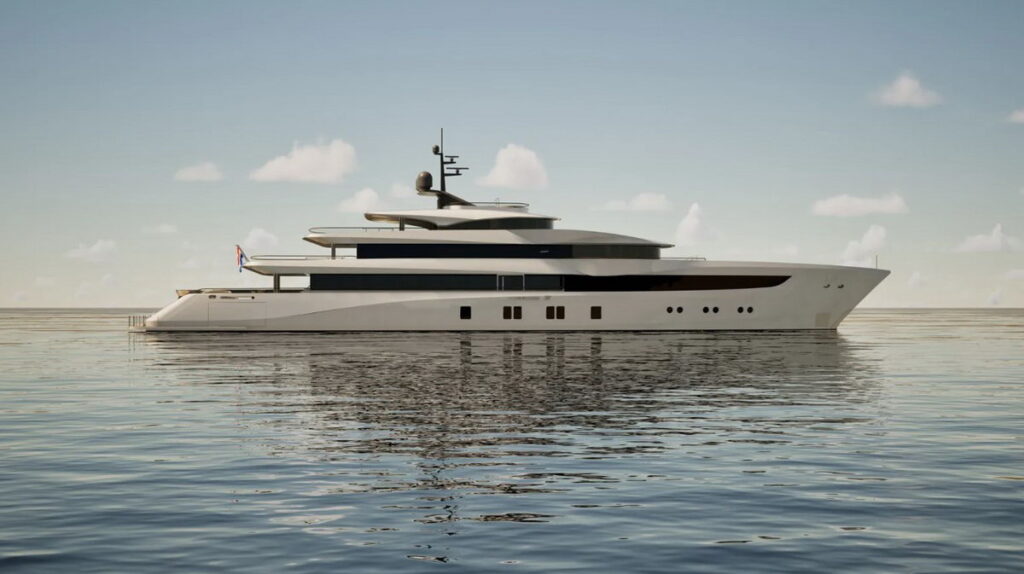
This harmony with the marine environment ensures that Project Opal will remain a sophisticated presence on the water for decades to come, functioning as a true sanctuary that happens to float.