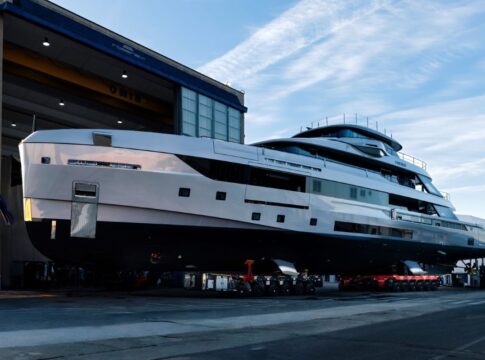




EU VAT divergence creates complexity for yacht owners and charter companies, driving legal uncertainty, competitive imbalances, and operational challenges across Mediterranean jurisdictions.
Thierry Voisin
President of the European Committee for Professional Yachting (ECPY)
The debate on VAT harmonization within the European Union has gained renewed momentum, particularly in sectors where cross-border activity is intrinsic. The yachting industry is a prime example. Yacht owners, charter companies, and maritime professionals operating across multiple EU jurisdictions are directly affected by divergent VAT regimes, which create complexity, uncertainty, and competitive imbalances. While EU directives provide a common framework, national implementation still results in significant disparities, especially in Mediterranean charter hubs.
A Snapshot of VAT Rates Across Key Yachting Jurisdictions
Despite operating under the same EU VAT Directive, member states apply markedly different VAT rates and calculation methods to yacht charters:
- France (and Monaco):Yachts operating under a charter contract are subject to the standard 20% VAT when the charter starts in France or Monaco. VAT is applied proportionally based on the time spent in EU territorial waters, provided that robust evidence (AIS tracking, logbooks) is maintained. Delivery and redelivery fees remain fully taxable at 20%. In case of yachts operating under a transport contract (predefined itinerary starting from France or Monaco and less than 90 days), the applicable VAT rate is 10% for navigation in French waters, 2,1% for Corsica and 0% for international waters. A potential VAT exemption on the entire transport contract is even possible if certain criteria are respected, such as a commercial stopover in another EU country. Regarding sales, the applicable VAT rate is 20%.
- Italy:Italy applies a 22% VAT rate, one of the highest in the EU, to charter fees for yachts starting their itinerary in Italian waters Italy also recognizes a VAT reduction linked to actual navigation outside EU territorial waters. However, the application of this reduction is strictly conditional upon the availability of detailed and verifiable evidence, such as AIS data, logbooks, and port clearance records. Regarding sales, the applicable VAT rate is 22%.
- Spain: Spain imposes a 21% VAT rate on yacht charters starting in Spanish ports. Unlike France and Italy, Spain does not allow reductions of the taxable base for time spent in international waters; VAT applies to 100% of the charter fee, making Spain one of the strictest regimes in the EU. Regarding sales, the applicable VAT rate is 21%.
- Croatia:Croatia applies a reduced 13% VAT rate on charter fees, despite its standard VAT rate being 25%. This reduced rate is fixed and applies only to the charter fee, with no additional reductions for international navigation. The relative simplicity of this system has made Croatia highly attractive to charter operators. Regarding sales, the applicable VAT rate is 25%.
- Greece:Greece operates one of the most complex but flexible VAT systems in the EU. While the standard VAT rate is 24%, yacht charters benefit from a reduced rate of 13% for short-term or domestic charters, and further significant reductions depending on the vessel’s Certificate of Compliance (CoC) and navigation profile:
- 5.2% VAT for yachts certified for unlimited navigation (60% reduction)
- 6.5% VAT for yachts with operational limitations (50% reduction)
Regarding sales, the applicable VAT rate is 24%.
Structural Divergences and Competitive Distortions
These figures illustrate a core issue: VAT rates on yacht charters within the EU range from 5.2% to 22%, depending on the country and operational model. Such divergence has several consequences:
- Regulatory arbitrage, where operators choose flag states or charter bases primarily for tax reasons
- Uneven competition between Mediterranean destinations
- Increased compliance costs for operators active in multiple jurisdictions
- Legal uncertainty, particularly where proportional VAT mechanisms are challenged or reinterpreted
From the EU’s perspective, these discrepancies undermine the principles of fiscal neutrality and fair competition.
The EU’s Push Toward Convergence
EU institutions have intensified audits and infringement procedures aimed at aligning national practices with VAT Directive principles. Particular attention is paid to:
- The genuine commercial use of yachts
- The validity of VAT reductions linked to international navigation
- Artificial structures designed primarily for tax optimization
High-profile enforcement cases and increased cooperation between tax authorities signal a clear trend toward stricter interpretation and enforcement.
Implications for Yacht Owners and Charter Companies
For yacht owners, especially those operating commercially, VAT harmonization reduces the scope for aggressive tax planning and increases the importance of substance over structure. Charter companies must now ensure:
- Accurate documentation of cruising areas
- Clear compliance with local licensing and VAT rules
- Continuous monitoring of legislative and administrative changes
While this may increase short-term costs, it also enhances long-term legal certainty.
Competitiveness of the EU Yachting Market
Critics argue that higher and more uniform VAT rates could push business toward non-EU destinations with lighter tax regimes. However, supporters of harmonization maintain that transparency, stability, and legal certainty ultimately strengthen the EU’s position as a premium and trustworthy yachting market.
The EU’s efforts toward VAT and tax harmonization are driven by several key objectives:
- Ensuring fair competition by preventing regulatory arbitrage between member states
- Reducing tax avoidance and aggressive tax planning
- Improving transparency and legal certainty
- Strengthening tax revenues for member states