


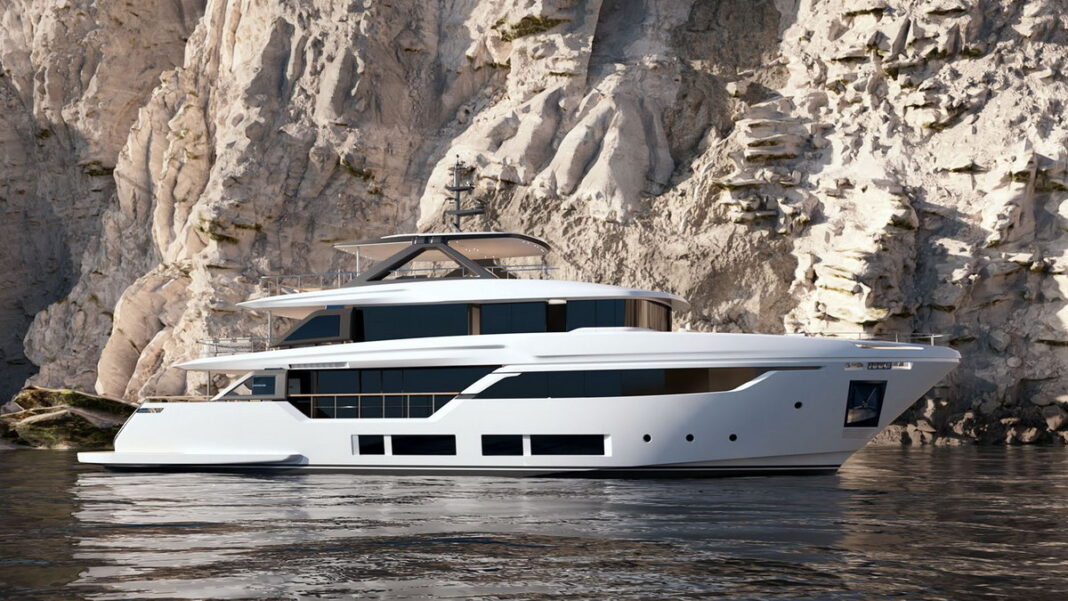
The new Custom Line Navetta 35 redefines luxury cruising with its automotive-inspired design, 300 square meters of space, and advanced environmental sustainability.
The Custom Line shipyard, a prestigious member of the Ferretti Group, continues to redefine the concepts of comfort, liveability, and luxury at sea. The newest member of the renowned Navetta family, the Navetta 35, bridges the gap between the Navetta 33 and the larger Navetta 38, offering a fresh, contemporary approach to yachting that emphasizes wellbeing on the water. The first 34.5-meter unit is already under construction at the Ferretti Group Superyacht Yard in Ancona, with delivery scheduled for autumn 2026, while the shipyard has confirmed that subsequent hulls are also in the build process.
Design and exterior aesthetics
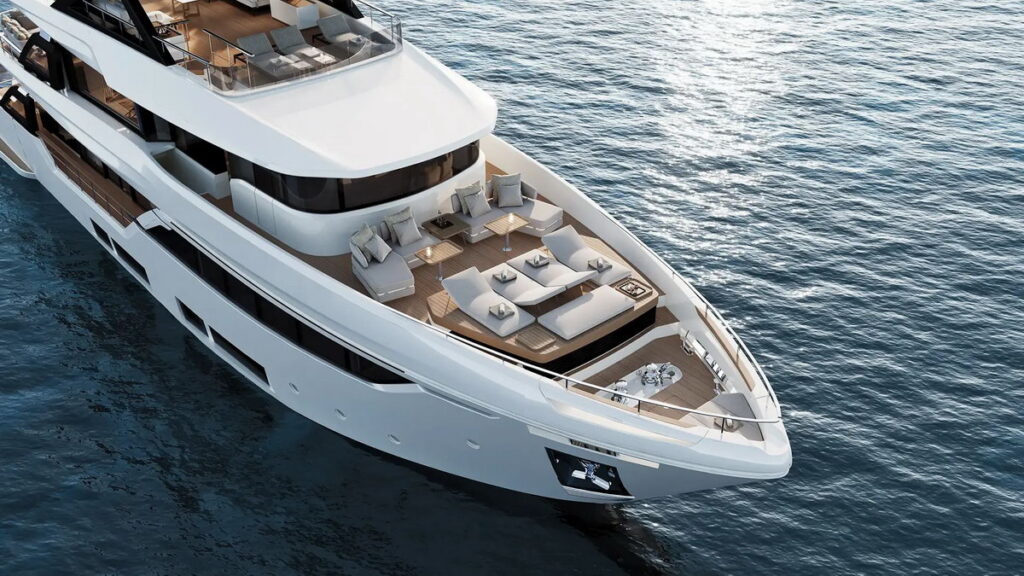
The exterior styling is the work of Italian designer Filippo Salvetti, who created a dynamic and modern profile inspired by the tension, vigor, and aerodynamic lines of sports cars. The design focus is placed squarely on the connection with the sea, particularly through the redesign of the stern area, which strengthens the visual and physical link to the water. A notable functional feature in this new design is the movement of the exterior staircase; instead of being situated in a central position aft, it has been moved to amidships. This strategic change allows for increased space on the aft decks as well as optimum functionality throughout the yacht’s exterior layout.
Interior philosophy and customization
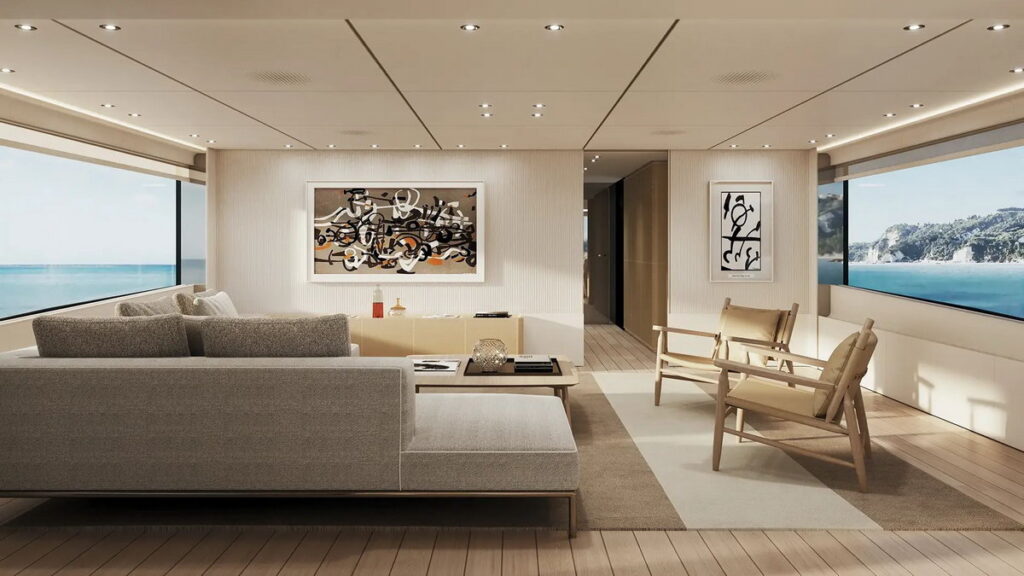
Internally, the signature comes from the renowned ACPV Architects Antonio Citterio Patricia Viel, with the Custom Line Atelier providing strategic consulting. The interior design philosophy focuses on bright and airy spaces filled with natural light, achieved through the extensive use of glass throughout the living areas, ensuring a continuous connection with the environment outside. The designers have developed three distinct concepts—Light Mood, Contrast Chocolate Mood, and Contrast Oyster Mood—offering owners the ability to choose between a bright, contemporary aesthetic with natural colors, a more rigorous style defined by dark leather and stone, or an understated, timeless appearance. Additionally, the interior staircase has been moved to a starboard position, cleverly concealed behind a reflective surface to allow for a generous, light-filled hallway without obstructions.
Space, liveability, and accommodations
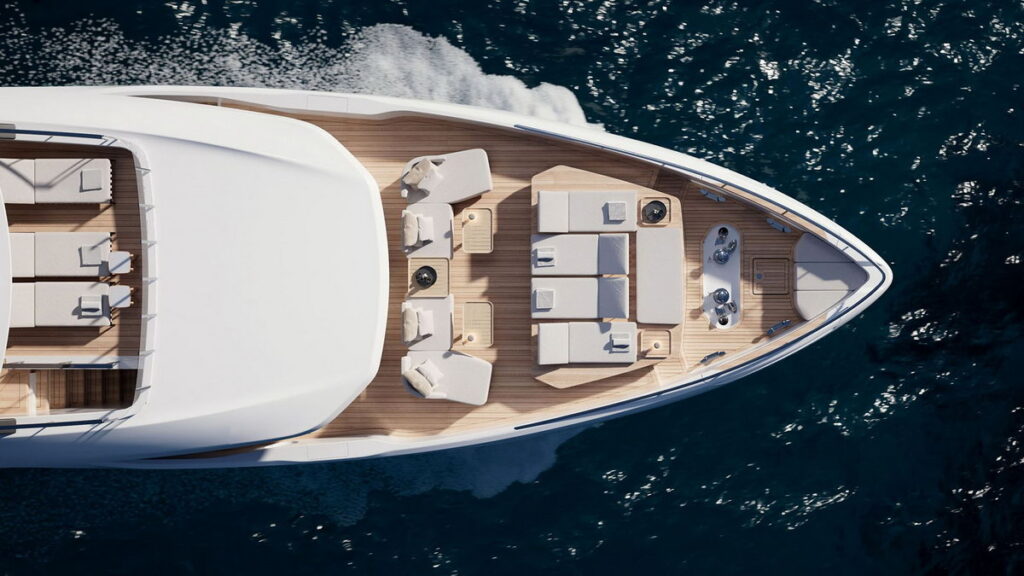
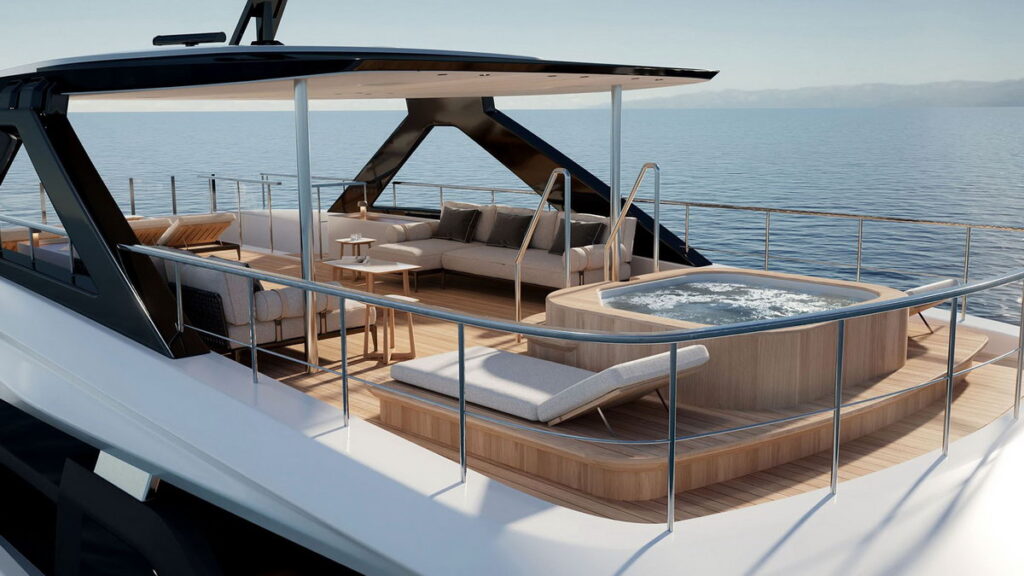
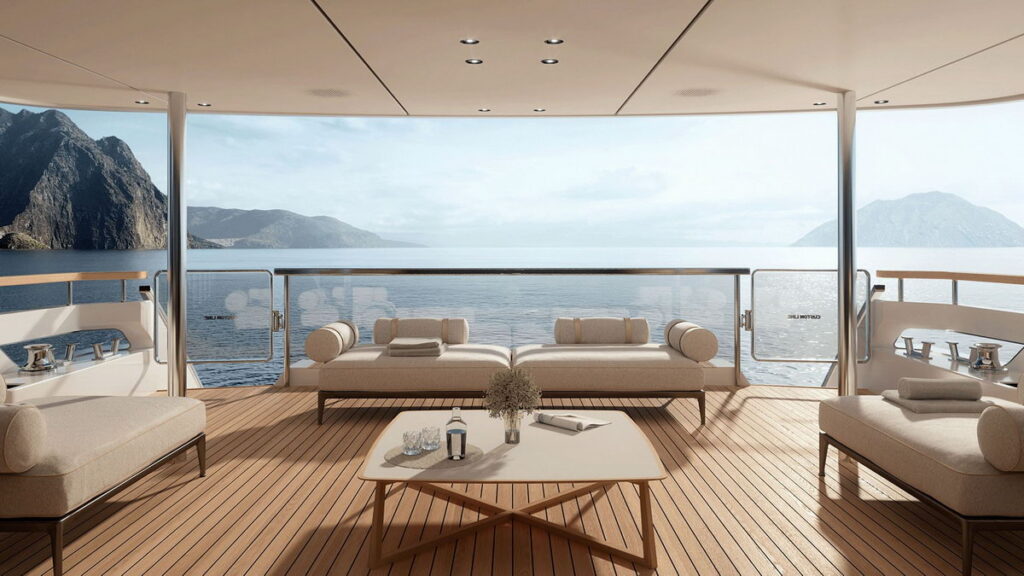
The Navetta 35 impresses with its volumes, offering over 300 square meters of total interior and exterior space across three expansive decks. The 58-square-meter sundeck features a central area shaded by a hard top and an optional panoramic spa pool at the stern surrounded by sunpads. Below, the upper deck features a 44-square-meter panoramic cockpit with al fresco dining for 10, a full-beam lounge, and a fully glazed interior skylounge, which the architects describe as a “glass box.” At the bow, a dedicated “sunset lounge” is designed with sea-facing sofas and a solarium for ultimate privacy.
Accommodations include five cabins for 10 guests, with the main deck master suite providing a private sanctuary, while the lower deck houses four additional cabins, one of which can be fitted with a Pullman berth. Further quarters on board accommodate a crew of six.
Technical performance and sustainability
Technically, the Navetta 35 is designed with transatlantic comfort and environmental friendliness in mind. The standard version is equipped with two Sleipner fin stabilizers, with gyroscopic stabilizers offered as an alternative option for maximum comfort at anchor and underway. Standard propulsion is provided by twin MAN V12 engines producing 1,400 hp, which allows the yacht to achieve a maximum speed of 15 knots. At an economic cruising speed of 10 knots, the range reaches approximately 1,750 nautical miles. Furthermore, the project is ready to install a selective catalytic reduction (SCR) system, reducing NOx emissions by 70 percent and complying with strict IMO Tier III regulations. With the Navetta 35, Custom Line proves that the tradition of Italian shipbuilding artistry can evolve, combining unparalleled aesthetics with modern technological and environmental demands.